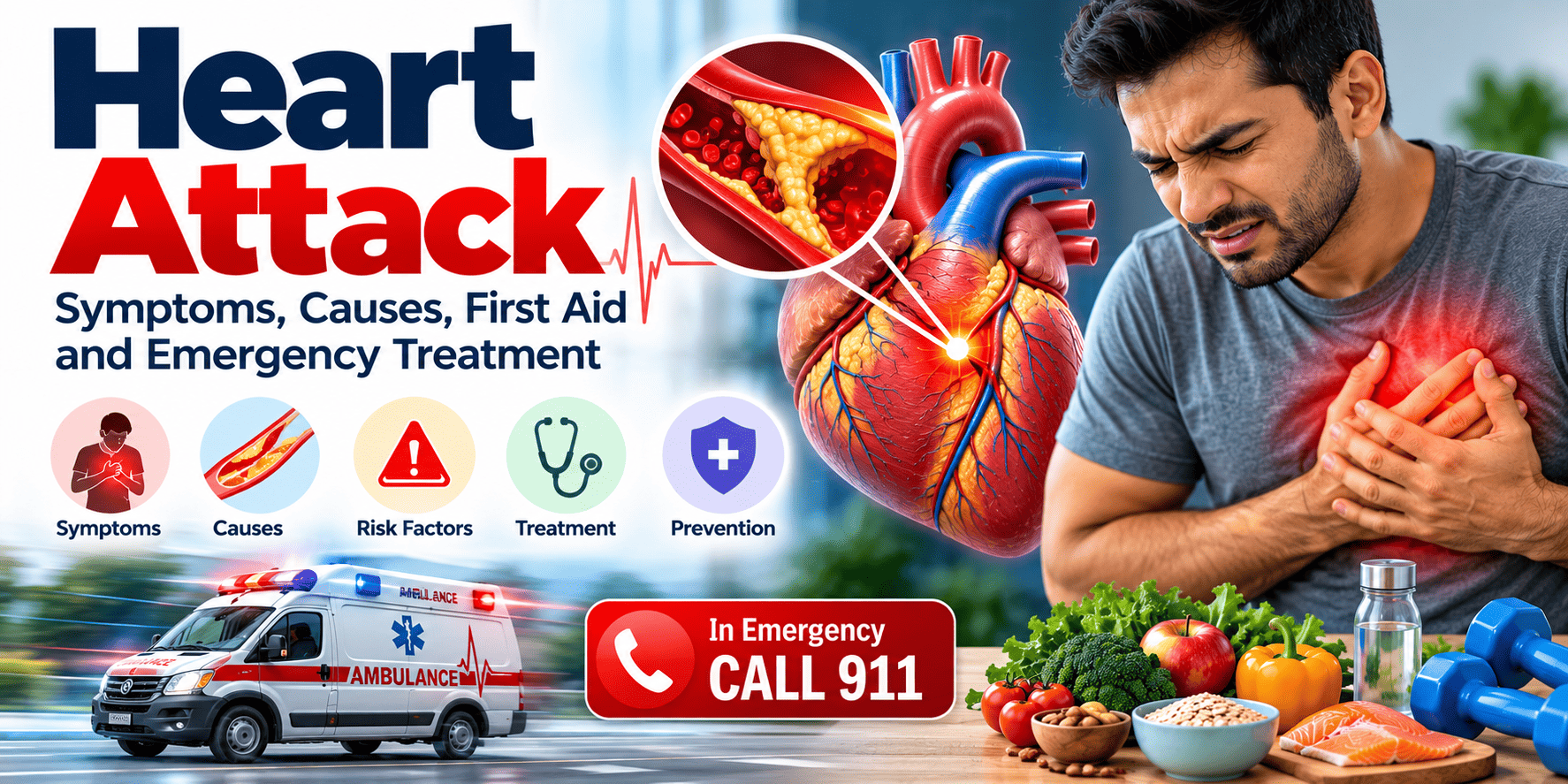
Heart Attack: Symptoms, Causes, First Aid and Emergency Treatment
A heart attack is a serious medical emergency that happens when blood flow to part of the heart muscle is suddenly reduced or blocked. Without enough oxygen-rich blood, the affected heart muscle can become damaged.
The medical name for a heart attack is myocardial infarction (MI).
A heart attack can happen suddenly, but the process behind it often develops slowly over many years. Fatty deposits called plaque can build up inside the coronary arteries. If a plaque breaks open, a blood clot can form and block blood flow to the heart.
A heart attack needs urgent medical treatment. The sooner a person reaches appropriate emergency care, the better the chance of limiting heart muscle damage and improving recovery. WHO describes heart attack as a medical emergency because heart muscle begins to suffer damage when it is deprived of oxygen.
This guide explains the warning signs, causes, risk factors, diagnosis, emergency response, hospital treatment, recovery, and prevention of heart attack.
What Is a Heart Attack?
A heart attack occurs when blood flow through a coronary artery becomes severely reduced or blocked.
The coronary arteries supply oxygen and nutrients to the heart muscle. When one of these arteries becomes blocked, the part of the heart supplied by that artery does not receive enough oxygen.
If blood flow is not restored quickly, heart muscle cells begin to die.
Most heart attacks are linked to coronary heart disease, also called ischemic heart disease. The most common mechanism is a blood clot forming after a fatty plaque inside a coronary artery ruptures.
A heart attack is sometimes confused with cardiac arrest, but they are not the same.
Heart Attack vs Cardiac Arrest
A heart attack is mainly a circulation problem. Blood flow to part of the heart becomes blocked.
Cardiac arrest is an electrical problem in which the heart suddenly stops pumping effectively.
A heart attack can sometimes cause cardiac arrest, but most heart attacks do not immediately cause cardiac arrest.
What Are the Warning Signs of a Heart Attack?
The most common warning sign is chest discomfort.
It may feel like:
- Pressure
- Tightness
- Squeezing
- Heaviness
- Fullness
- Uncomfortable pressure in the center of the chest
The discomfort may last for several minutes or come and go.
Other possible symptoms include:
- Pain or discomfort in one or both arms
- Shoulder pain
- Pain in the back
- Neck pain
- Jaw discomfort
- Shortness of breath
- Cold sweating
- Nausea or vomiting
- Light-headedness
- Fainting
- Unusual weakness
- A feeling of extreme tiredness
Not everyone experiences the same symptoms.
Women, older adults, and people with diabetes may be more likely to have less typical symptoms, such as shortness of breath, nausea, unusual tiredness, or back and jaw discomfort. Some people, especially those with diabetes-related nerve damage, may have little or no chest pain.
What Does Heart Attack Chest Pain Feel Like?
Heart attack discomfort is often described as pressure, squeezing, heaviness, or tightness rather than a sharp pain.
It may be located in the center of the chest and can spread to:
- The left or right arm
- Both arms
- Shoulder
- Back
- Neck
- Jaw
However, symptoms can vary.
Some people may not experience obvious chest pain at all.
Because many conditions can cause chest discomfort, it is not possible to safely diagnose a heart attack based only on how the pain feels.
New or unexplained chest discomfort should be treated seriously.
Heart Attack Symptoms in Women
Heart attack symptoms can be different from the classic picture often shown in movies.
Women may experience:
- Chest pressure or discomfort
- Shortness of breath
- Nausea
- Vomiting
- Back pain
- Jaw pain
- Unusual tiredness
- Dizziness
- Weakness
This does not mean women cannot have classic chest pain. They can.
The important point is that unusual symptoms should not be ignored when a heart attack is possible.
Heart Attack Symptoms in Older Adults
Older adults may sometimes have less typical symptoms.
They may experience:
- Breathlessness
- Weakness
- Confusion
- Dizziness
- Unusual fatigue
- Mild or absent chest pain
This can make early recognition more difficult.
Any sudden or unexplained change in health should be evaluated promptly, especially in someone with known heart disease or several cardiovascular risk factors.
What Causes a Heart Attack?
The most common underlying cause is atherosclerosis.
Atherosclerosis happens when fatty deposits, cholesterol, and other substances build up inside the walls of arteries.
Over time, a plaque can become unstable and rupture.
The body responds by forming a blood clot.
If the clot blocks a coronary artery, blood flow to part of the heart muscle can suddenly decrease or stop.
This can result in a heart attack.
Major Risk Factors for Heart Attack
Several factors can increase the risk of a heart attack.
High Blood Pressure
Long-term high blood pressure can damage artery walls and increase cardiovascular risk.
Regular blood pressure checks and appropriate treatment can help reduce this risk.
High Cholesterol
High levels of certain blood lipids can contribute to plaque formation inside arteries.
High cholesterol often causes no symptoms, which is why blood testing is important for people who need it.
Smoking
Tobacco use damages blood vessels and strongly increases cardiovascular risk.
Stopping smoking is one of the most important steps for reducing heart attack risk.
Diabetes
Long-term high blood glucose can damage blood vessels and increase the risk of cardiovascular disease.
People with diabetes should also manage other risk factors such as blood pressure and cholesterol.
Physical Inactivity
Regular physical activity supports cardiovascular health.
A sedentary lifestyle can contribute to obesity, high blood pressure, diabetes, and abnormal cholesterol levels.
Excess Body Weight
Overweight and obesity can increase the risk of several conditions associated with heart disease.
Healthy and sustainable weight management can help reduce overall cardiovascular risk.
Unhealthy Diet
A diet high in excess salt, added sugars, unhealthy fats, and highly processed foods can increase cardiovascular risk.
A diet containing vegetables, fruits, whole grains, beans, nuts, and other nutrient-rich foods can support heart health.
Harmful Alcohol Use
Heavy alcohol consumption can increase blood pressure and contribute to cardiovascular problems.
Family History
Having close family members with cardiovascular disease can increase risk.
Genetic factors can influence blood pressure, cholesterol, and other cardiovascular conditions.
Age
Heart attack risk generally increases with age, although heart attacks can also happen in younger adults.
Air Pollution
Air pollution is also recognized as an environmental cardiovascular risk factor.
Can Stress Cause a Heart Attack?
Stress can affect cardiovascular health in several ways.
Long-term stress may contribute to:
- Poor sleep
- Physical inactivity
- Unhealthy eating
- Smoking
- Increased alcohol use
- Higher blood pressure
Stress alone should not be described as the single cause of most heart attacks. A heart attack usually results from several interacting risk factors and underlying coronary artery disease.
Managing stress is nevertheless an important part of overall heart health.
What Should You Do If You Think Someone Is Having a Heart Attack?
Treat suspected heart attack symptoms as an emergency.
The first step is to activate your local emergency medical service immediately.
Do not wait to see whether the symptoms disappear.
Emergency medical transport is generally preferred because emergency professionals can begin assessment and care during transport. The American Heart Association and American Red Cross recommend activating emergency medical services for adults with acute chest pain.
While waiting for emergency help:
- Help the person stop physical activity.
- Keep them in a comfortable position.
- Stay with them.
- Follow instructions from the emergency dispatcher.
- If the person becomes unresponsive and is not breathing normally, begin CPR and use an AED if available and you know how to use it.
- Do not allow the person to drive themselves to the hospital.
Should You Take Aspirin During a Suspected Heart Attack?
Aspirin may be used in some adults with suspected heart attack, but it is not appropriate for everyone.
Current first-aid guidance says that an alert adult with non-traumatic acute chest pain may be encouraged to chew and swallow aspirin while waiting for emergency medical services if they have no known aspirin allergy and have not been advised by a healthcare professional to avoid it.
However, the safest general rule for public health information is:
Call emergency medical services first and follow the emergency dispatcher’s instructions.
Do not delay emergency care to find or take aspirin.
The American Heart Association specifically advises people not to take aspirin and wait for it to relieve symptoms instead of calling emergency services.
People with aspirin allergy, certain bleeding conditions, or other medical reasons to avoid aspirin should not take it unless advised by an appropriate healthcare professional.
What Should You Not Do During a Suspected Heart Attack?
Avoid:
- Waiting several hours to see if symptoms improve
- Driving yourself to the hospital
- Exercising
- Taking someone else’s prescription medicine
- Taking random painkillers
- Delaying emergency care while trying home remedies
- Assuming the symptoms are only gas or indigestion
A heart attack can become life-threatening quickly.
How Is a Heart Attack Diagnosed?
Doctors use several types of information to diagnose a heart attack.
Symptoms and Medical History
The healthcare team will ask about:
- When symptoms started
- Where the discomfort is located
- How it feels
- Whether it spreads
- Other symptoms
- Previous heart problems
- Medicines
- Risk factors
Electrocardiogram
An ECG or EKG records the electrical activity of the heart.
It can show changes associated with a heart attack and can help doctors determine the type of acute coronary syndrome.
Troponin Blood Test
When heart muscle cells are damaged, they release proteins called cardiac troponins into the blood.
A blood test can measure these proteins.
High-sensitivity cardiac troponin tests are widely used when evaluating suspected acute myocardial infarction.
Coronary Angiography
Coronary angiography can show where a coronary artery is narrowed or blocked.
A thin catheter is passed through a blood vessel to the coronary arteries, where contrast material and imaging help identify the blockage.
In some cases, diagnosis and treatment can occur during the same procedure.
What Is the Emergency Treatment for a Heart Attack?
The main goal is to restore blood flow to the heart as quickly as possible.
Angioplasty and Stent
A common treatment is percutaneous coronary intervention (PCI).
A catheter is used to reach the blocked artery.
A balloon may be used to open the narrowed area, and a stent is commonly placed to help keep the artery open.
When appropriate and available quickly, primary PCI is an important treatment for acute heart attack.
Clot-Dissolving Medicines
In some situations, when rapid PCI is not available or cannot be performed within the appropriate time, doctors may use medicines called thrombolytics to dissolve the blood clot.
These medicines are not suitable for everyone.
Doctors must assess the potential benefits and bleeding risks before using them.
Medicines
Hospital treatment may include medicines such as:
- Antiplatelet medicines
- Anticoagulants in selected situations
- Statins
- Beta-blockers in appropriate patients
- ACE inhibitors or related medicines when indicated
- Other medicines based on the patient’s condition
The exact treatment depends on the type of heart attack, test results, blood pressure, kidney function, bleeding risk, and other medical factors.
Can a Heart Attack Require Surgery?
Sometimes.
If coronary arteries have severe or complex blockages, doctors may recommend coronary artery bypass grafting (CABG).
During bypass surgery, blood flow is redirected around blocked sections of coronary arteries using healthy blood vessels from another part of the body.
Not every heart attack requires bypass surgery.
The treatment is selected based on the location and severity of the blockage and the patient’s overall condition.
What Happens After a Heart Attack?
Recovery is different for each person.
After emergency treatment, doctors usually focus on preventing another heart attack and helping the heart recover.
This may involve:
- Prescription medicines
- Blood pressure control
- Cholesterol management
- Diabetes management
- Smoking cessation
- Healthy eating
- Physical activity
- Cardiac rehabilitation
- Regular follow-up
Taking medicines exactly as prescribed is important.
What Is Cardiac Rehabilitation?
Cardiac rehabilitation is a structured program designed to help people recover after certain heart conditions and procedures.
It can include:
- Supervised exercise
- Education
- Nutrition guidance
- Risk-factor management
- Medication support
- Psychological support
- Lifestyle counseling
WHO notes that structured cardiac rehabilitation can improve long-term outcomes after a heart attack, although access remains limited in many areas.
How Long Does It Take to Recover From a Heart Attack?
Recovery time varies.
Some people return to normal activities relatively quickly, while others need weeks or months.
Recovery depends on:
- Amount of heart muscle damage
- Type of heart attack
- Treatment received
- Other health conditions
- Age
- Physical fitness
- Complications
- Participation in cardiac rehabilitation
A healthcare team should provide individual guidance about returning to work, exercise, driving, and other activities.
Can You Exercise After a Heart Attack?
Physical activity is generally an important part of recovery, but it should be restarted according to medical advice.
Cardiac rehabilitation can provide a safe and structured way to increase activity.
Do not suddenly return to intense exercise without medical guidance after a heart attack.
Can a Heart Attack Happen Again?
Yes.
Having one heart attack increases the importance of controlling cardiovascular risk factors and following the treatment plan.
Risk can be reduced by:
- Taking prescribed medicines
- Not smoking
- Managing blood pressure
- Managing cholesterol
- Managing diabetes
- Eating a heart-healthy diet
- Staying physically active
- Maintaining a healthy weight
- Attending follow-up appointments
Prevention after a heart attack is a long-term process.
How Can Heart Attacks Be Prevented?
Many heart attacks can be prevented by controlling major cardiovascular risk factors.
WHO identifies tobacco use, unhealthy diet, physical inactivity, harmful alcohol use, overweight and obesity, high blood pressure, high blood glucose, and high blood lipids among the important preventable or controllable risk factors.
Do Not Smoke
Avoid tobacco products and seek support if you want to quit smoking.
Control Blood Pressure
High blood pressure often has no symptoms.
Regular monitoring and appropriate treatment can reduce cardiovascular risk.
Manage Cholesterol
Have cholesterol checked when recommended and follow medical advice if levels are high.
Manage Diabetes
Keep blood glucose within the range recommended by your healthcare team.
Eat a Balanced Diet
Choose more:
- Vegetables
- Fruits
- Whole grains
- Beans
- Lentils
- Nuts
- Seeds
- Appropriate protein sources
Limit excess:
- Salt
- Added sugar
- Saturated fat
- Trans fat
- Highly processed foods
Stay Physically Active
Regular physical activity supports cardiovascular health and can improve several heart disease risk factors.
Maintain a Healthy Weight
If you have overweight, gradual weight management may improve blood pressure, blood glucose, and cholesterol.
Limit Harmful Alcohol Use
Excessive alcohol can increase cardiovascular risk.
Can a Heart Attack Be Prevented if You Have Family History?
A family history can increase risk, but it does not mean that a heart attack is unavoidable.
You cannot change your genes, age, or family history.
However, you can often manage other risk factors such as:
- Smoking
- Blood pressure
- Cholesterol
- Diabetes
- Physical inactivity
- Diet
- Body weight
People with a strong family history should discuss their cardiovascular risk with a healthcare professional.
Heart Attack in Younger Adults
Heart attacks can occur in younger adults.
Although age is an important risk factor, younger people can also have cardiovascular risk factors such as:
- Smoking
- Diabetes
- High cholesterol
- High blood pressure
- Obesity
- Physical inactivity
- Strong family history
- Certain inherited conditions
Unexplained chest discomfort should never be dismissed simply because someone is young.
Frequently Asked Questions
What is the first sign of a heart attack?
A common first warning sign is pressure, tightness, squeezing, or discomfort in the center of the chest. However, symptoms vary and some people have little or no chest pain.
Can a heart attack happen without chest pain?
Yes. Some people, especially women, older adults, and people with diabetes, may have less typical symptoms. Some heart attacks can also cause little or no pain.
How long can heart attack symptoms last?
Symptoms may last for several minutes or come and go. There is no safe amount of time to wait. Suspected heart attack symptoms require immediate emergency evaluation.
Can gas feel like a heart attack?
Digestive problems can cause chest discomfort, but it is not safe to assume that unexplained chest pain is gas. A heart attack can sometimes feel like indigestion.
Can a heart attack happen during sleep?
Yes. A heart attack can happen at any time, including during sleep.
Can stress cause a heart attack?
Stress can contribute to cardiovascular risk, but most heart attacks are associated with underlying coronary artery disease and multiple risk factors.
Can walking prevent a heart attack?
Regular physical activity can reduce cardiovascular risk when combined with other healthy habits. However, no single activity can guarantee prevention.
What is the difference between a heart attack and cardiac arrest?
A heart attack is caused by a blood-flow problem affecting heart muscle. Cardiac arrest is an electrical problem that causes the heart to stop pumping effectively. A heart attack can trigger cardiac arrest, but they are different conditions.
Should you drive yourself to the hospital during a heart attack?
No. Activate local emergency medical services rather than driving yourself. Emergency teams can begin assessment and care during transport.