Mental Health: Common Disorders, Symptoms, Treatment and Self-Care
Mental health is an important part of overall health. It affects how people think, feel, behave, manage stress, build relationships, work, study, and make everyday decisions.
Everyone experiences changes in mood. Feeling worried before an important event, feeling sad after a loss, or becoming stressed during a difficult period does not automatically mean that a person has a mental disorder.
However, when emotional, behavioral, or psychological symptoms become persistent, severe, or interfere with everyday life, professional support may be needed.
According to the World Health Organization (WHO), nearly 1 in 7 people worldwide were living with a mental disorder in 2023. Anxiety and depressive disorders are among the most common. Effective treatments are available, but many people still do not receive the care they need.
This guide explains mental health, common mental health conditions, symptoms, causes and risk factors, diagnosis, treatment, self-care, prevention, and when to seek professional help.
What Is Mental Health?
WHO describes mental health as a state of mental well-being that helps people cope with the normal stresses of life, use their abilities, learn and work effectively, and contribute to their communities.
Mental health is more than simply the absence of a mental disorder.
A person’s mental health can change throughout life depending on:
- Physical health
- Family relationships
- Work or school
- Financial circumstances
- Sleep
- Social connections
- Trauma or difficult experiences
- Genetics
- Environment
- Substance use
- Other medical conditions
Mental health can improve with appropriate support and treatment.
What Is a Mental Disorder?
A mental disorder involves a clinically significant disturbance in thinking, emotional regulation, or behavior that is usually associated with significant distress or difficulty functioning in important areas of life.
There are many different mental disorders, and they can affect people in very different ways.
Having a mental disorder does not mean a person is weak, dangerous, or incapable of living a meaningful life.
Many mental health conditions can be treated effectively.
Common Mental Health Disorders
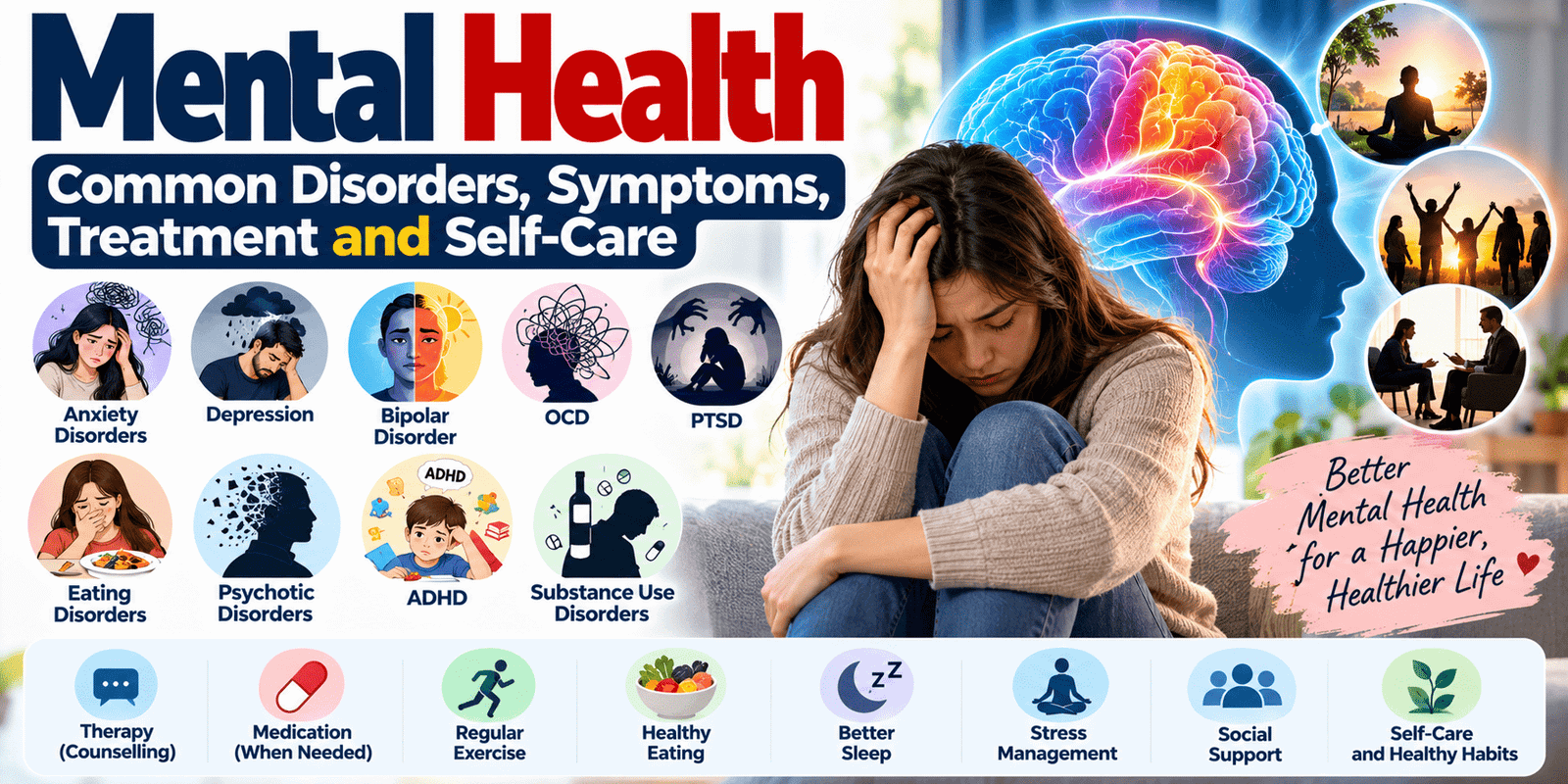
Mental health conditions are diverse. Some of the more common groups include:
- Anxiety disorders
- Depressive disorders
- Bipolar disorder
- Post-traumatic stress disorder (PTSD)
- Obsessive-compulsive disorder (OCD)
- Eating disorders
- Psychotic disorders
- Neurodevelopmental disorders such as ADHD
- Substance-use disorders
A person may also experience more than one condition at the same time.
Anxiety Disorders
Everyone experiences anxiety sometimes.
An anxiety disorder is different because fear or worry becomes excessive, difficult to control, persistent, and disruptive to daily life.
Common symptoms may include:
- Excessive worrying
- Feeling constantly nervous or tense
- Restlessness
- Difficulty concentrating
- Irritability
- Sleep problems
- Rapid heartbeat
- Sweating
- Stomach discomfort
- Avoiding situations because of fear
Types of anxiety disorders include:
- Generalized anxiety disorder
- Panic disorder
- Social anxiety disorder
- Separation anxiety disorder
- Specific phobias
Effective psychological treatments are available, and medication may be considered for some people depending on their condition and severity.
Depression
Depression is more than temporary sadness.
During a depressive episode, a person may experience persistent low mood or loss of interest or pleasure in activities, along with other symptoms that affect daily functioning. WHO notes that symptoms can include poor concentration, feelings of guilt or low self-worth, hopelessness, changes in sleep or appetite, low energy, and thoughts about death or suicide.
Possible symptoms include:
- Persistent sadness
- Loss of interest in normal activities
- Low energy
- Difficulty concentrating
- Feelings of worthlessness
- Excessive guilt
- Changes in appetite
- Changes in sleep
- Irritability
- Social withdrawal
- Hopelessness
Depression is treatable. Treatment can include psychotherapy, medication, or both depending on the person’s needs.
Bipolar Disorder
Bipolar disorder involves episodes of depression as well as episodes of elevated or unusually irritable mood and changes in energy and activity.
During a manic or hypomanic episode, a person may experience:
- Increased energy
- Reduced need for sleep
- Increased activity
- Rapid speech
- Racing thoughts
- Increased confidence
- Impulsive or risky behavior
Symptoms and severity can vary significantly between individuals.
Bipolar disorder requires professional assessment and long-term management. Treatment may involve medication, psychological support, lifestyle management, and regular follow-up.
Post-Traumatic Stress Disorder
Post-traumatic stress disorder (PTSD) can develop after exposure to a traumatic or extremely stressful event.
Possible symptoms include:
- Intrusive memories
- Distressing dreams
- Avoidance of reminders
- Feeling constantly on guard
- Sleep problems
- Emotional distress
- Difficulty concentrating
- Changes in mood or behavior
Not everyone who experiences trauma develops PTSD.
Professional treatment can help people process trauma and manage symptoms.
Obsessive-Compulsive Disorder
OCD involves recurring unwanted thoughts, images, or urges called obsessions and repetitive behaviors or mental acts called compulsions.
Examples can include excessive fears about contamination, repeated checking, or a strong need for particular patterns or routines.
The key point is that OCD is not simply being neat or organized.
Symptoms can consume significant time and interfere with daily life.
Evidence-based psychotherapy and, for some people, medication can help manage OCD.
Mental Health Symptoms to Watch For
Mental health symptoms can be emotional, physical, behavioral, or cognitive.
Common warning signs include:
Emotional Changes
- Persistent sadness
- Excessive fear or worry
- Irritability
- Hopelessness
- Emotional numbness
- Sudden mood changes
Behavioral Changes
- Avoiding friends or family
- Losing interest in normal activities
- Major changes in daily routine
- Increased alcohol or drug use
- Risky behavior
- Difficulty maintaining normal responsibilities
Physical and Cognitive Changes
- Sleep problems
- Appetite changes
- Unexplained fatigue
- Difficulty concentrating
- Memory problems
- Unexplained physical complaints
One symptom alone does not necessarily indicate a mental disorder.
The duration, severity, combination of symptoms, and effect on daily life are important.
When Should You Seek Professional Help?
Consider talking to a healthcare professional or mental health professional when symptoms:
- Continue for around two weeks or longer
- Are becoming worse
- Interfere with work or school
- Affect relationships
- Make normal daily activities difficult
- Cause significant distress
- Lead to major changes in sleep or appetite
- Cause persistent hopelessness
NIMH recommends seeking professional help when severe or distressing symptoms persist, including sleep problems, loss of interest, concentration difficulties, appetite changes, low mood, and difficulty completing normal activities.
You do not need to wait until symptoms become severe before asking for help.
What Causes Mental Health Problems?
There is usually no single cause.
Mental health conditions can result from a complex combination of biological, psychological, social, and environmental factors.
Possible factors include:
Genetics
Some mental disorders can run in families.
Having a family history may increase risk, but it does not mean that a person will definitely develop the condition.
Brain and Biological Factors
Brain development, hormones, nervous-system function, and other biological processes can influence mental health.
Trauma
Abuse, violence, serious accidents, loss, disasters, or other traumatic experiences can affect mental health.
Chronic Stress
Long-term stress related to work, relationships, finances, caregiving, discrimination, or other circumstances can affect emotional well-being.
Social Environment
Social isolation, poverty, unsafe living conditions, violence, and discrimination can increase mental-health risks. WHO notes that individual, family, community, and structural factors can all influence mental health.
How Are Mental Health Conditions Diagnosed?
There is usually no single blood test that can diagnose every mental disorder.
A healthcare professional may evaluate:
- Symptoms
- How long symptoms have been present
- Severity
- Daily functioning
- Medical history
- Family history
- Medication use
- Alcohol or drug use
- Sleep
- Stress and life circumstances
- Other physical health conditions
A doctor may also perform physical examinations or tests when necessary to rule out medical conditions that can cause similar symptoms.
For example, some physical illnesses or medicines can contribute to changes in mood, concentration, or sleep. NIMH notes that a healthcare evaluation can help rule out physical causes of symptoms.
Mental Health Treatment
Treatment depends on the condition, severity, symptoms, personal preferences, medical history, and available services.
Common treatment approaches include:
- Psychotherapy
- Medication
- Lifestyle and behavioral support
- Family or social support
- Treatment for substance use when needed
- Specialized psychiatric care
- Hospital or emergency care for severe situations
Some people need one treatment approach, while others benefit from a combination.
Psychotherapy
Psychotherapy, also called talk therapy or counseling, involves working with a trained mental health professional.
It can help people:
- Understand difficult thoughts and emotions
- Develop coping skills
- Change unhelpful thought patterns
- Improve communication
- Manage anxiety
- Process trauma
- Improve relationships
- Build healthier behaviors
Cognitive behavioral therapy (CBT) is one example of an evidence-based psychological approach.
NIMH notes that psychotherapy can be used alone or together with medication depending on an individual’s needs.
Mental Health Medicines
Some mental disorders can benefit from prescription medicines.
Depending on the condition, doctors may prescribe medicines such as:
- Antidepressants
- Anti-anxiety medicines in selected situations
- Mood stabilizers
- Antipsychotic medicines
- Other condition-specific medicines
Medicines affect people differently.
Finding the right medicine and dose can sometimes require medical monitoring and adjustments.
Never start, stop, or change a psychiatric medicine without discussing it with your healthcare professional.
Stopping some medicines suddenly can cause withdrawal symptoms or other problems.
Self-Care and Mental Well-Being
Self-care does not replace professional treatment when treatment is needed, but healthy habits can support mental well-being.
Get Enough Sleep
Try to maintain a regular sleep schedule.
Poor sleep can affect mood, concentration, energy, and stress.
Stay Physically Active
Regular physical activity can support both physical and mental health.
Even simple activities such as walking can be a useful part of a healthy routine.
Eat Regular, Balanced Meals
A balanced diet supports overall health.
Avoid relying on alcohol or drugs to manage stress or emotional pain.
Stay Connected
Talking with trusted friends, family members, support groups, or community members can reduce isolation.
NIMH recommends staying connected with people who can provide emotional and practical support.
Take Breaks
Make time for activities that you enjoy and that help you relax.
Manage Stress
Useful approaches may include:
- Breathing exercises
- Meditation
- Relaxation
- Walking
- Hobbies
- Journaling
- Social connection
- Professional counseling
Different approaches work for different people.
Mental Health and Physical Health
Mental and physical health are closely connected.
Chronic physical illnesses can increase the risk of depression and anxiety, while untreated mental health conditions can make it harder to manage physical health conditions.
Mental health should therefore be treated as part of overall healthcare rather than as something separate from physical health.
Mental Health in Children and Teenagers
Mental health problems can occur during childhood and adolescence.
WHO reports that about 1 in 7 people aged 10–19 globally experiences a mental disorder. Depression, anxiety, and behavioral disorders are among important causes of illness and disability in this age group.
Possible warning signs in young people include:
- Major changes in behavior
- Withdrawal from friends
- Falling school performance
- Persistent sadness
- Excessive worry
- Irritability
- Sleep changes
- Appetite changes
- Loss of interest
- Difficulty concentrating
Parents, caregivers, teachers, and healthcare professionals can all play an important role in identifying concerns.
Children and teenagers should not be diagnosed based only on online information.
Mental Health During Major Life Events
Difficult life events can temporarily affect mental well-being.
Examples include:
- Bereavement
- Relationship problems
- Job loss
- Financial stress
- Serious illness
- Pregnancy and childbirth
- Natural disasters
- Conflict or displacement
- Social isolation
Psychological distress after difficult events is common, and many people recover with time and support. However, persistent or severe symptoms may require professional care.
Mental Health and Stigma
Stigma can prevent people from seeking help.
A mental health condition is not a personal failure.
People experiencing mental health problems deserve the same respect, dignity, and appropriate medical care as people experiencing physical illnesses.
Supportive communication can make it easier for someone to seek professional help.
Suicide and Self-Harm: When Immediate Help Is Needed
Thoughts about suicide or self-harm require serious attention.
Warning signs can include:
- Talking about wanting to die
- Feeling hopeless or trapped
- Saying they are a burden
- Withdrawing from friends or family
- Giving away important possessions
- Saying goodbye unexpectedly
- Searching for ways to die
- Sudden extreme mood changes
- Increased alcohol or drug use
- Making a suicide plan
WHO and NIMH identify these as important warning signs that someone may be at risk.
If You Think You May Hurt Yourself
Do not stay alone with the crisis.
Contact a trusted person, mental health professional, crisis service, or local emergency service immediately.
If there is immediate danger, go to the nearest emergency department or contact your local emergency medical/emergency service.
Because crisis numbers differ by country, people outside the United States should use the emergency or crisis service available in their country.
If you are in the United States, the 988 Suicide & Crisis Lifeline provides 24/7 crisis support.
If you are helping someone else who may be at immediate risk, stay with them when it is safe to do so and help connect them with urgent professional support.
Can Mental Health Problems Be Prevented?
Not every mental health condition can be prevented.
However, several habits and social factors can support better mental health:
- Building supportive relationships
- Getting adequate sleep
- Staying physically active
- Managing stress
- Avoiding harmful alcohol or drug use
- Seeking help early
- Maintaining regular healthcare
- Creating safe and supportive environments
- Addressing trauma and chronic stress when possible
Prevention also involves communities and health systems, not just individual behavior.
When to Contact a Mental Health Professional
Seek professional support if you notice:
- Persistent sadness
- Severe anxiety
- Major sleep changes
- Significant appetite changes
- Loss of interest in normal activities
- Difficulty concentrating
- Social withdrawal
- Increasing alcohol or drug use
- Problems performing normal responsibilities
- Persistent hopelessness
- Thoughts of self-harm or suicide
Early support can make it easier to identify the problem and begin appropriate treatment.
Frequently Asked Questions
What is mental health?
Mental health refers to a person’s emotional, psychological, and social well-being and their ability to cope with life, function, and maintain relationships.
What are the most common mental health disorders?
Anxiety and depressive disorders are among the most common mental disorders worldwide. Other conditions include bipolar disorder, PTSD, OCD, eating disorders, psychotic disorders, and neurodevelopmental disorders.
Is feeling sad the same as depression?
No. Temporary sadness is a normal human emotion. Depression involves persistent symptoms that can significantly affect mood, interest, functioning, and other areas of life.
Can anxiety be treated?
Yes. Effective treatments for anxiety disorders exist. Psychological treatment is commonly used, and medication may be appropriate for some people.
Can mental health conditions be cured?
Some conditions may resolve or enter remission, while others require long-term management. Many mental health conditions can be treated effectively, and people can improve substantially with appropriate care.
Does therapy really work?
Evidence-based psychotherapy can help with many mental health conditions. The appropriate therapy depends on the condition and individual needs.
Do all mental health conditions require medication?
No. Treatment varies. Some people benefit from psychotherapy alone, while others need medication, a combination of treatments, or other specialized care.
How do I know when I need professional help?
Consider professional help when symptoms are persistent, severe, worsening, or interfering with normal activities, relationships, work, or school.
Can lifestyle changes improve mental health?
Healthy sleep, physical activity, social connection, balanced nutrition, and stress management can support mental well-being. They should not replace professional treatment when a mental disorder requires medical care.
How can I help someone with a mental health problem?
Listen without judgment, take their concerns seriously, encourage professional support, and help them access appropriate healthcare. If there is immediate danger of self-harm, seek emergency help.
Key Takeaways
- Mental health is an important part of overall health.
- Mental disorders can affect thoughts, emotions, behavior, relationships, work, and daily activities.
- Anxiety and depression are among the most common mental disorders worldwide.
- Mental health conditions can result from a complex combination of biological, psychological, social, and environmental factors.
- Persistent or severe symptoms should be evaluated by a qualified healthcare professional.
- Psychotherapy and medication are common evidence-based treatments, depending on the condition.
- Sleep, physical activity, social connection, stress management, and healthy routines can support mental well-being.
- Children and teenagers can also experience mental health conditions and may need age-appropriate professional support.
- Suicide or self-harm warning signs require immediate attention.
- Seeking mental health support is a form of healthcare, not a sign of weakness.
Medical Disclaimer
The information in this article is provided for general educational and informational purposes only.
It is not intended to replace professional medical advice, diagnosis, psychotherapy, psychiatric assessment, treatment, or emergency care.
Do not diagnose yourself or another person based only on this article.
Mental health symptoms can have different causes, and a qualified healthcare professional should assess persistent, severe, or concerning symptoms.
Do not start, stop, or change prescription medicines based only on information found online.
If you or someone else may be in immediate danger, experiencing a mental health emergency, or at risk of self-harm or suicide, seek urgent professional help and contact your local emergency service or crisis service.
For readers in the United States, 988 provides 24/7 crisis support.
Trusted Medical References
- World Health Organization (WHO) — Mental Disorders
- World Health Organization — Mental Health
- WHO — Anxiety Disorders
- WHO — Adolescent Mental Health
- WHO — Suicide Prevention
- National Institute of Mental Health (NIMH) — My Mental Health: Do I Need Help?
- NIMH — Psychotherapies
- NIMH — Mental Health Medications
- NIMH — Warning Signs of Suicide
Article review date: October 2026