Stroke: Symptoms, Causes, Warning Signs, Treatment and Recovery
A stroke is a serious medical emergency that happens when the blood supply to part of the brain is interrupted or when a blood vessel in the brain bursts.
The brain needs a constant supply of oxygen and nutrients to work properly. When blood flow is blocked or bleeding occurs, brain cells can become damaged within a short time.
A stroke can affect movement, speech, vision, memory, balance, and other important functions. The effects depend on which part of the brain is affected and how much damage occurs.
Recognizing the warning signs quickly and getting emergency medical treatment can reduce the risk of severe disability and other complications.
This guide explains what a stroke is, the main types, symptoms, causes, risk factors, diagnosis, emergency treatment, recovery, prevention, and frequently asked questions.
What Is a Stroke?
A stroke occurs when blood flow to part of the brain is interrupted or when a blood vessel in the brain breaks and causes bleeding.
There are two main types of stroke:
- Ischemic stroke
- Hemorrhagic stroke
There is also a condition called a transient ischemic attack (TIA), sometimes called a mini-stroke. A TIA causes temporary stroke-like symptoms and is an important warning sign that requires medical evaluation.
WHO describes stroke as a medical emergency because rapid diagnosis and treatment are important for reducing brain damage and disability. (who.int)
What Are the Main Types of Stroke?
Ischemic Stroke
An ischemic stroke happens when a blood vessel supplying the brain becomes blocked.
The blockage may occur because of:
- A blood clot
- Plaque buildup
- A clot that travels from another part of the body
When blood cannot reach part of the brain, that area does not receive enough oxygen.
Ischemic stroke is the most common type of stroke.
Hemorrhagic Stroke
A hemorrhagic stroke happens when a blood vessel in the brain breaks and causes bleeding.
The blood can put pressure on surrounding brain tissue and damage brain cells.
High blood pressure is an important risk factor for this type of stroke.
Transient Ischemic Attack
A TIA happens when blood flow to part of the brain is temporarily interrupted.
The symptoms may disappear after a short time.
However, a TIA should never be ignored.
It can be a warning that a major stroke may happen in the future.
Anyone who develops sudden stroke-like symptoms needs urgent medical evaluation, even if the symptoms improve.
What Are the Warning Signs of a Stroke?
Stroke symptoms usually appear suddenly.
Common warning signs include:
- Sudden weakness or numbness of the face
- Sudden weakness or numbness of an arm or leg
- Difficulty speaking
- Trouble understanding speech
- Sudden confusion
- Sudden vision problems
- Sudden dizziness
- Loss of balance
- Difficulty walking
- Sudden severe headache without a known cause
The symptoms depend on which area of the brain is affected.
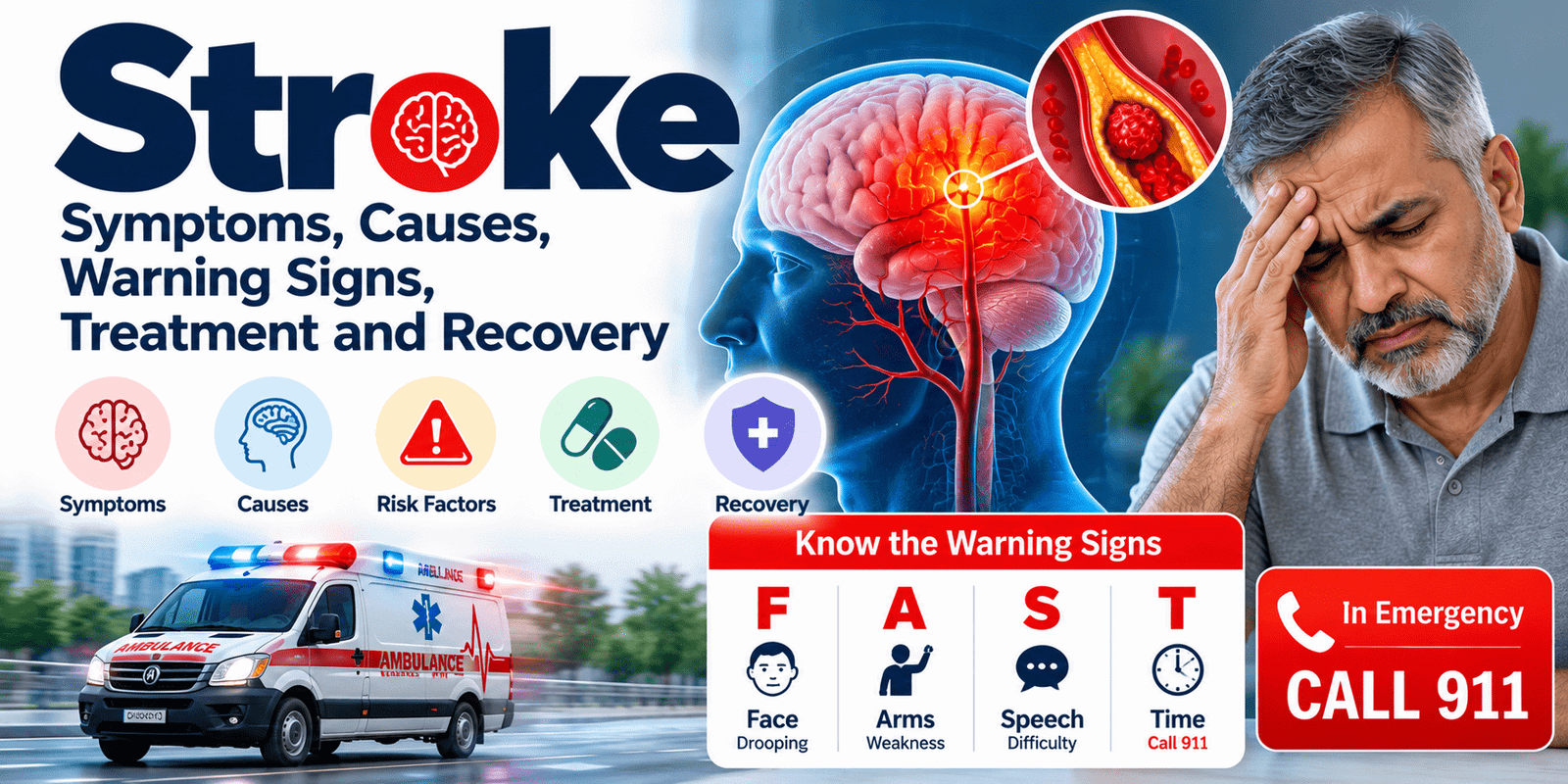
A useful way to remember common stroke warning signs is FAST:
F — Face
Ask the person to smile.
Does one side of the face droop?
A — Arms
Ask the person to raise both arms.
Does one arm drift