Cancer: Early Warning Signs, Risk Factors, Diagnosis and Treatment
Cancer is a large group of diseases that can develop in almost any part of the body. It happens when abnormal cells grow uncontrollably, invade nearby tissues, or spread to other parts of the body. This spread is called metastasis.
Cancer is one of the leading causes of death worldwide. The World Health Organization (WHO) estimates that cancer caused nearly 10 million deaths in 2024. The most common cancers include lung, breast, colorectal, prostate, stomach, and liver cancers, although the pattern differs between countries and populations.
The good news is that many cancers can be prevented, detected early, treated effectively, or controlled for long periods. Early diagnosis is especially important because many cancers respond better to treatment when found before they have spread.
This guide explains cancer symptoms, warning signs, causes, risk factors, diagnosis, stages, treatment, prevention, screening, and common questions.
What Is Cancer?
Normally, cells in the body grow, divide, and die in a controlled way.
Cancer develops when genetic changes disrupt this normal process. Abnormal cells may continue growing when they should stop and may invade surrounding tissues.
Some cancers form solid tumors, while others, such as many leukemias, mainly affect blood-forming tissues and do not form a typical solid tumor.
Cancer is not one single disease. There are hundreds of different cancer types, and each can behave differently.
The type of cancer, its location, genetic characteristics, and stage all influence treatment decisions.
Common Types of Cancer
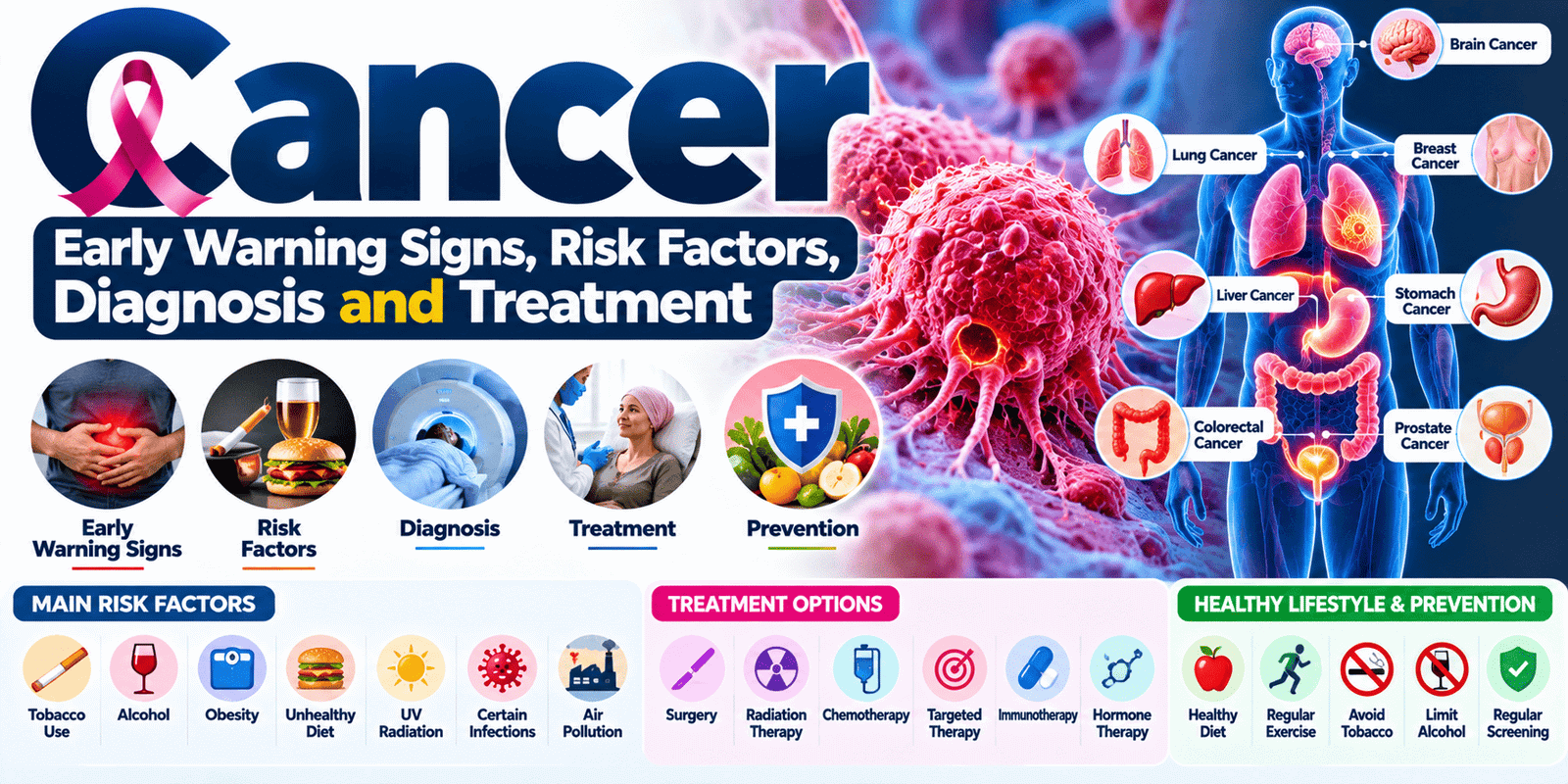
Some of the most common cancers worldwide include:
- Lung cancer
- Breast cancer
- Colorectal cancer
- Prostate cancer
- Stomach cancer
- Liver cancer
- Cervical cancer
- Skin cancer
- Kidney cancer
- Bladder cancer
- Pancreatic cancer
- Blood cancers such as leukemia and lymphoma
The most common cancers vary according to country, age, sex, lifestyle, environmental exposures, and other factors.
Early Warning Signs of Cancer
Cancer can cause many different symptoms.
However, most symptoms that people experience are not caused by cancer. They may result from infections, injuries, benign conditions, hormonal problems, or other illnesses.
Still, symptoms that persist or worsen should be evaluated by a healthcare professional.
Possible warning signs include:
1. Unexplained Weight Loss
Losing a significant amount of weight without intentionally changing your diet or activity can have many causes.
Cancer is one possible cause, but unexplained weight loss should be medically evaluated rather than automatically assumed to be cancer.
2. Persistent Unusual Lump or Swelling
A new lump, swelling, or thickened area anywhere on the body should be checked if it persists or changes.
Examples include lumps in the breast, neck, abdomen, or other areas.
Not every lump is cancer.
3. Unexplained Bleeding
Unexpected bleeding can occur for many reasons.
Examples that may need medical evaluation include:
- Blood in the stool
- Blood in the urine
- Coughing up blood
- Unusual vaginal bleeding
- Vomiting blood
The cause should be investigated rather than assumed.
4. Persistent Changes in Bowel or Bladder Habits
Changes that continue for several weeks may include:
- Persistent constipation
- Persistent diarrhea
- Blood in stool
- Changes in stool appearance
- Pain during urination
- Blood in urine
- Increased urinary frequency
These symptoms can have many non-cancer causes but should be assessed if persistent.
5. Persistent Cough or Voice Changes
A cough that does not improve, persistent hoarseness, coughing up blood, or breathing changes may require medical evaluation.
6. Persistent Difficulty Swallowing
Difficulty swallowing food or liquids can have several causes.
Persistent swallowing problems should be evaluated by a healthcare professional.
7. Skin Changes
Changes that may require evaluation include:
- A new mole
- A mole that changes in size, shape, or color
- A sore that does not heal
- Persistent skin changes
- Unusual bleeding or crusting
Not every skin change is cancer, but persistent or changing lesions should be checked.
8. Persistent Fever or Night Sweats
Unexplained fever or repeated night sweats can occur with infections and many other conditions. In some cancers, particularly certain blood cancers, they may also occur.
9. Persistent Fatigue
Severe or unexplained tiredness can occur with many medical conditions, including anemia, infections, sleep problems, thyroid disorders, depression, and cancer.
Persistent fatigue should be evaluated when it is unexplained or affects daily life.
10. Persistent Pain
Cancer does not always cause pain, particularly during early stages. Therefore, waiting for pain before seeking medical care is not recommended.
Persistent or unexplained pain should be assessed.
What Causes Cancer?
Cancer develops through genetic changes that affect how cells grow and behave.
These changes can result from:
- Random biological changes
- Inherited genetic factors
- Tobacco exposure
- Alcohol
- Ultraviolet radiation
- Ionizing radiation
- Certain chemicals
- Certain infections
- Environmental exposures
- Age-related changes
WHO describes cancer development as the result of interactions between genetic factors and external physical, chemical, and biological carcinogens.
In many individual cases, it is impossible to identify one specific cause.
Major Cancer Risk Factors
Tobacco
Tobacco is one of the most important preventable causes of cancer.
Smoking and other forms of tobacco use increase the risk of multiple cancers, including lung, mouth, throat, esophageal, pancreatic, bladder, kidney, and several other cancers.
Avoiding tobacco is one of the most effective ways to reduce cancer risk.
Alcohol
Alcohol consumption increases the risk of several cancers.
The risk generally increases with greater alcohol exposure.
Reducing alcohol intake can lower cancer risk.
Excess Body Weight
Overweight and obesity are associated with an increased risk of several cancers.
Maintaining a healthy body weight can therefore contribute to cancer prevention.
Physical Inactivity
Regular physical activity is associated with lower risk of several cancers and provides additional benefits for heart and metabolic health.
Unhealthy Diet
A diet consistently high in highly processed foods and low in nutritious foods may contribute to cancer risk through several pathways.
A balanced diet containing vegetables, fruits, whole grains, legumes, and other nutrient-rich foods supports overall health.
UV Radiation
Excessive exposure to ultraviolet radiation increases the risk of skin cancers.
Protection from excessive sun exposure and avoiding artificial tanning devices can reduce risk.
Certain Infections
Some infections can increase cancer risk.
Important examples include:
- Human papillomavirus (HPV)
- Hepatitis B virus
- Hepatitis C virus
- Helicobacter pylori
- Epstein-Barr virus
Vaccination against HPV and hepatitis B can help prevent some infection-related cancers.
Air Pollution
Outdoor air pollution is an important risk factor for lung cancer.
Indoor air pollution can also contribute to cancer risk in some settings.
Age
Cancer risk generally increases with age because genetic changes and exposure to risk factors accumulate over time.
However, cancer can occur at any age, including childhood and young adulthood.
Can Cancer Be Prevented?
Not all cancers can be prevented.
Genetics, age, random cellular changes, and factors that cannot always be controlled also play a role.
However, WHO estimates that a substantial proportion of cancers can currently be prevented through reducing known risk factors and using evidence-based prevention strategies.
Important prevention steps include:
- Do not use tobacco
- Avoid or limit alcohol
- Maintain a healthy weight
- Exercise regularly
- Eat a balanced diet
- Protect skin from excessive UV exposure
- Get recommended HPV and hepatitis B vaccinations
- Follow appropriate occupational safety measures
- Reduce exposure to harmful environmental pollutants where possible
- Follow recommended cancer screening programs
Cancer Screening
Screening means testing people who do not have symptoms to look for cancer or abnormal changes that could become cancer.
Screening is different from diagnostic testing.
Screening is useful only for certain cancers and specific groups of people. It can also have potential harms, including false-positive results, unnecessary procedures, and overdiagnosis.
Recommended screening depends on:
- Age
- Sex
- Family history
- Personal medical history
- Genetic risk
- Country
- Available healthcare services
- Specific cancer risk
Examples of established screening programs include breast, cervical, colorectal, and lung cancer screening in appropriate populations.
Because screening guidelines differ between countries, follow the recommendations of your local health authority or qualified healthcare professional.
Screening vs Early Diagnosis
These terms are related but not identical.
Screening
Screening looks for cancer or precancerous changes before symptoms develop.
Early Diagnosis
Early diagnosis focuses on identifying cancer quickly after symptoms appear.
Both approaches can improve outcomes.
WHO emphasizes that early diagnosis is relevant to many cancers and requires awareness of symptoms, access to diagnostic services, and timely treatment.
How Is Cancer Diagnosed?
There is no single test that can diagnose every cancer.
Doctors may use several methods depending on the suspected cancer.
Medical History
The doctor may ask about:
- Symptoms
- Duration of symptoms
- Family history
- Previous illnesses
- Tobacco and alcohol use
- Medicines
- Occupational exposures
- Previous cancer history
Physical Examination
A physical examination may help identify:
- Lumps
- Enlarged lymph nodes
- Skin changes
- Abdominal abnormalities
- Other physical signs
Blood and Laboratory Tests
Blood tests may provide useful information but usually cannot diagnose every cancer by themselves.
They may help identify abnormalities or support a diagnosis.
Imaging
Depending on the suspected cancer, doctors may use:
- X-rays
- Ultrasound
- CT scans
- MRI
- PET scans
- Mammography
- Other specialized imaging
Biopsy
A biopsy involves removing a sample of tissue or cells for laboratory examination.
For many cancers, biopsy is the most definitive way to confirm that cancer cells are present.
What Is Cancer Staging?
After cancer is diagnosed, doctors may determine its stage.
Staging describes how extensive the cancer is.
It may consider:
- Tumor size
- Nearby lymph-node involvement
- Whether the cancer has spread to distant organs
- Characteristics of the cancer cells
- Other cancer-specific factors
The exact staging system varies by cancer type.
Stage information helps doctors choose appropriate treatment and discuss prognosis.
Cancer Treatment
Cancer treatment depends on the specific cancer and the individual patient.
Treatment may include one or more approaches.
Surgery
Surgery removes cancerous tissue when this is possible and appropriate.
It can be used to:
- Remove a tumor
- Remove surrounding tissue
- Remove affected lymph nodes
- Relieve symptoms in some situations
Radiation Therapy
Radiation therapy uses high-energy radiation to damage cancer cells.
It may be used alone or together with other treatments.
Chemotherapy
Chemotherapy uses medicines that kill cancer cells or stop them from growing.
It may be used before surgery, after surgery, together with radiation, or for advanced disease depending on the cancer.
Immunotherapy
Immunotherapy helps the immune system recognize or attack cancer cells.
It is useful for certain cancers but does not work for every cancer or every patient.
Targeted Therapy
Targeted therapies focus on specific molecular changes that help cancer cells grow or survive.
Biomarker testing may help doctors determine whether a targeted treatment is appropriate.
Hormone Therapy
Some cancers depend on hormones to grow.
Hormone therapy can slow or stop the growth of certain hormone-sensitive cancers, including some breast and prostate cancers.
Can Cancer Be Cured?
Some cancers can be cured, particularly when they are detected early and treated appropriately.
However, there is no single cure for all cancers.
The outcome depends on:
- Cancer type
- Stage
- Tumor biology
- Genetic characteristics
- Overall health
- Response to treatment
- Access to appropriate treatment
WHO notes that many cancers have a high chance of cure when detected early and treated effectively.
A doctor should explain the expected outlook for an individual patient.
Living With Cancer
Cancer treatment can affect physical and emotional health.
Patients may experience:
- Fatigue
- Appetite changes
- Pain
- Nausea
- Sleep problems
- Anxiety
- Depression
- Changes in body image
- Financial stress
- Relationship challenges
Supportive care can help manage these problems.
Cancer care may involve:
- Nutrition support
- Pain management
- Mental health support
- Physical rehabilitation
- Social support
- Palliative care
- Family support
Palliative care is not only for the final days of life. It can help relieve symptoms and improve quality of life during serious illness. WHO describes palliative care as an important component of comprehensive cancer care.
Cancer Survivorship
People who complete cancer treatment may still need ongoing medical care.
Survivorship care may include:
- Follow-up appointments
- Monitoring for recurrence
- Managing treatment side effects
- Mental health support
- Healthy lifestyle
- Screening for other cancers when appropriate
A cancer survivor’s follow-up plan depends on the type and treatment of cancer.
Cancer and Mental Health
A cancer diagnosis can be emotionally difficult.
People may experience:
- Fear
- Anxiety
- Sadness
- Anger
- Uncertainty
- Depression
- Sleep problems
These reactions are understandable, but persistent or severe symptoms should receive professional support.
Family members and caregivers may also need emotional support.
When Should You See a Doctor?
You should consider medical evaluation if you have a symptom that is:
- New
- Unexplained
- Persistent
- Getting worse
- Associated with unexplained weight loss
- Associated with unusual bleeding
- Associated with a persistent lump
- Affecting normal daily activities
NCI recommends seeing a doctor when concerning symptoms persist for several weeks rather than waiting for them to disappear or for pain to develop.
This does not mean that you have cancer.
It means that the cause should be identified.
Frequently Asked Questions
What are the early warning signs of cancer?
Possible warning signs include unexplained weight loss, persistent lumps, unusual bleeding, persistent cough, bowel or bladder changes, skin changes, difficulty swallowing, unexplained fatigue, or persistent symptoms. These signs have many possible non-cancer causes.
Does cancer always cause pain?
No. Many cancers do not cause pain in their early stages. Do not wait for pain before seeking medical evaluation.
Is every lump cancer?
No. Many lumps are benign or caused by infections, cysts, inflammation, or other conditions.
However, a new or persistent lump should be medically evaluated.
Can cancer be prevented?
Not every cancer can be prevented, but many cases can potentially be prevented by avoiding tobacco, maintaining a healthy weight, staying active, limiting alcohol, protecting against excessive UV exposure, getting appropriate vaccinations, and reducing certain environmental exposures.
Is cancer contagious?
Cancer itself is generally not contagious.
However, some infections that increase cancer risk, such as HPV and hepatitis B, can spread between people.
Can a healthy lifestyle cure cancer?
A healthy lifestyle can support overall health and may reduce the risk of some cancers, but lifestyle changes should not be presented as a replacement for evidence-based cancer treatment.
Is chemotherapy the only cancer treatment?
No. Cancer treatment may include surgery, radiation therapy, chemotherapy, immunotherapy, targeted therapy, hormone therapy, or combinations of these depending on the cancer.
What is the difference between screening and diagnosis?
Screening is testing people without symptoms to look for cancer or precancerous changes. Diagnosis investigates symptoms or abnormal findings to determine whether cancer is actually present.
Can cancer come back after treatment?
Some cancers can recur after treatment, while others may not. The risk depends on cancer type, stage, biology, and treatment.
Regular follow-up helps doctors monitor for recurrence and manage long-term health.
Does early detection improve cancer outcomes?
For many cancers, yes. Early detection can make treatment more effective and can improve the chance of survival.
Key Takeaways
- Cancer is a large group of diseases caused by abnormal cell growth.
- Cancer can develop in almost any part of the body.
- Possible warning signs include persistent lumps, unexplained weight loss, unusual bleeding, persistent cough, bowel or bladder changes, and persistent unexplained symptoms.
- Most symptoms are not caused by cancer, but persistent symptoms should be evaluated.
- Tobacco, alcohol, unhealthy diet, physical inactivity, excess body weight, certain infections, UV radiation, and some environmental exposures can increase cancer risk.
- Many cancers can be prevented or their risk reduced.
- Screening is recommended only for certain cancers and specific populations.
- Diagnosis may involve examination, laboratory tests, imaging, and biopsy.
- Treatment can include surgery, radiation, chemotherapy, immunotherapy, targeted therapy, hormone therapy, or combinations.
- Many cancers have better treatment outcomes when detected early.
- There is no universal cancer cure or single treatment that works for every patient.
- Cancer care should always be personalized by qualified healthcare professionals.
Medical Disclaimer
The information in this article is provided for general educational and informational purposes only.
It is not intended to replace professional medical advice, diagnosis, treatment, or cancer care.
Cancer is a complex group of diseases. Symptoms, tests, treatment options, and outcomes can vary greatly between individuals.
Do not diagnose yourself based on this article or delay medical care because a symptom seems mild.
Do not start, stop, or change cancer treatment, medicines, supplements, or other therapies without discussing them with an appropriately qualified healthcare professional.
Cancer screening recommendations vary by country, age, sex, family history, personal risk, and available healthcare services. Follow the recommendations of your local healthcare authority or doctor.
If you have concerning symptoms, arrange an appropriate medical evaluation.
If you experience a medical emergency, contact your local emergency medical service or visit the nearest emergency department.
Trusted Medical References
- World Health Organization (WHO) — Cancer Fact Sheet
- WHO — Cancer Screening and Early Detection
- WHO — Cancer Treatment
- National Cancer Institute (NCI) — Cancer Symptoms
- NCI — Cancer Diagnosis and Staging
- NCI — Types of Cancer Treatment
- CDC — Cancer Screening Tests
- CDC — Cancer Prevention
Article review date: October 2026