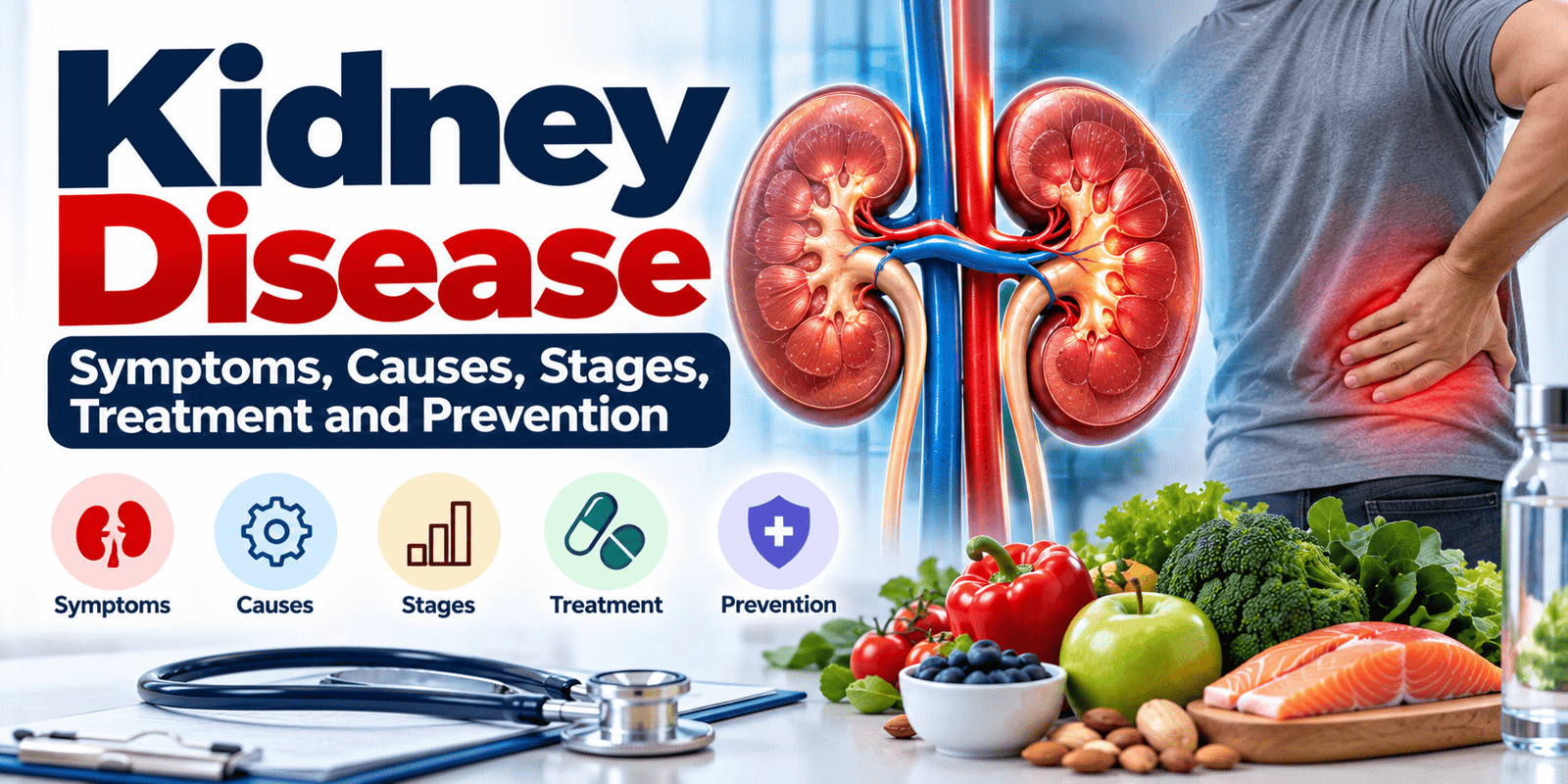
Kidney Disease: Symptoms, Causes, Stages, Treatment and Prevention
Kidneys are two important organs that work continuously to keep the body healthy. They filter waste and extra fluid from the blood, help control blood pressure, support healthy bones, and help the body make red blood cells.
Kidney disease happens when the kidneys become damaged or cannot work properly. Some kidney problems develop suddenly, while others develop slowly over many years.
One of the most important forms is chronic kidney disease (CKD). CKD means that the kidneys have been damaged or their structure or function has been abnormal for a long period, generally at least three months.
A major problem with chronic kidney disease is that it may not cause noticeable symptoms in its early stages. A person can feel completely healthy while kidney damage is developing. Blood and urine tests are therefore important for people who have risk factors such as diabetes, high blood pressure, heart disease, or a family history of kidney disease.
This guide explains kidney disease in simple language, including symptoms, causes, risk factors, stages, diagnosis, treatment, diet, prevention, kidney failure, dialysis, and frequently asked questions.
What Do the Kidneys Do?
The kidneys perform several important jobs.
Their main functions include:
- Removing waste products from the blood
- Removing extra water from the body
- Producing urine
- Helping control blood pressure
- Maintaining the body’s mineral balance
- Supporting healthy bones
- Helping the body produce red blood cells
- Maintaining the right balance of fluids and electrolytes
When the kidneys become damaged, waste and extra fluid can build up in the body.
Kidney disease can also affect other parts of the body because the kidneys are closely connected with blood pressure, heart health, blood chemistry, and hormone systems.
What Is Chronic Kidney Disease?
Chronic kidney disease, or CKD, means that the kidneys have lasting damage or reduced function.
CKD usually develops slowly.
The condition can be caused by many different diseases. In adults, diabetes and high blood pressure are the most common causes.
CKD is generally evaluated using two important measurements:
- eGFR: estimates how well the kidneys filter blood.
- uACR: measures the amount of albumin, a type of protein, in the urine.
These tests provide different information about kidney health. A complete assessment may require both.
CKD is generally confirmed when kidney damage or reduced kidney function persists for at least three months.
What Are the Symptoms of Kidney Disease?
Early kidney disease often causes no symptoms.
This is one of the main reasons kidney disease can remain undiagnosed.
As kidney function becomes more impaired, symptoms may include:
- Swelling in the feet, ankles, legs, hands, or face
- Changes in how often you urinate
- Foamy urine
- Blood in the urine
- Tiredness
- Poor appetite
- Nausea or vomiting
- Itchy or dry skin
- Muscle cramps
- Trouble sleeping
- Difficulty concentrating
- Unexplained weight loss
- Shortness of breath
Not everyone with kidney disease will have these symptoms.
Symptoms can also occur because of many other health conditions, so they cannot be used alone to diagnose kidney disease.
Why Can Kidney Disease Have No Symptoms?
The kidneys have a significant reserve capacity.
They can continue performing many of their functions even when some kidney tissue has been damaged.
Because of this, a person may not notice anything unusual during the early stages.
This is why people with diabetes, high blood pressure, cardiovascular disease, or a family history of kidney failure may need kidney testing even when they feel well.
What Causes Kidney Disease?
Kidney disease has many possible causes.
Diabetes
Diabetes is one of the most common causes of chronic kidney disease in adults.
Long-term high blood glucose can damage the small blood vessels and filtering structures inside the kidneys.
Over time, damaged kidneys may have difficulty removing waste and extra fluid from the blood.
High Blood Pressure
High blood pressure can damage blood vessels inside the kidneys.
Kidney disease can also make blood pressure harder to control.
This can create a cycle in which high blood pressure damages the kidneys, while kidney disease contributes to higher blood pressure.
Heart Disease
Heart and kidney health are closely connected.
Cardiovascular disease can increase the risk of kidney problems, and chronic kidney disease can increase the risk of heart disease and stroke.
Kidney Inflammation
Some diseases can cause inflammation of the kidney’s filtering structures.
Examples include certain forms of glomerulonephritis and immune-related kidney diseases.
Genetic Conditions
Some kidney diseases are inherited.
One example is polycystic kidney disease, which can cause multiple cysts to develop in the kidneys.
Kidney Stones
Repeated or complicated kidney stones can sometimes contribute to kidney damage, especially when they cause obstruction or repeated infections.
Kidney Infections
Some severe or repeated infections can damage the kidneys.
A urinary tract infection that spreads to the kidneys requires appropriate medical treatment.
Certain Medicines and Toxins
Some medicines or substances can damage the kidneys, especially when used incorrectly or in people who already have reduced kidney function.
This is why people with kidney disease should tell their healthcare professional about all prescription medicines, over-the-counter medicines, and supplements they use.
NIDDK lists several other possible causes, including autoimmune diseases, infections, certain cancers, inherited conditions, severe obesity, and some vascular diseases.
Who Is at Higher Risk of Kidney Disease?
Risk is higher in people with:
- Diabetes
- High blood pressure
- Heart disease
- Heart failure
- Family history of kidney disease or kidney failure
- Older age
- Obesity
- Previous acute kidney injury
- Smoking or tobacco use
- Certain inherited diseases
Having one risk factor does not mean that a person will definitely develop kidney disease.
However, it can mean that kidney health should be monitored more carefully.
How Is Kidney Disease Diagnosed?
Two important tests are commonly used to evaluate chronic kidney disease.
Blood Test: eGFR
A blood test measures creatinine, a waste product that the kidneys normally remove.
Healthcare professionals use creatinine and other information to estimate the glomerular filtration rate (eGFR).
A lower eGFR can indicate reduced kidney function.
However, one abnormal result does not automatically prove chronic kidney disease. Doctors consider whether the abnormality is persistent and whether there are other signs of kidney damage.
Urine Test: uACR
A urine albumin-to-creatinine ratio, or uACR, checks for albumin in the urine.
Healthy kidneys normally keep most albumin in the blood.
When kidney filters are damaged, albumin can leak into the urine.
Persistent albumin in urine can therefore be an important sign of kidney damage.
Other Tests
Depending on the suspected cause, a doctor may also recommend:
- Urinalysis
- Blood pressure measurement
- Blood glucose testing
- Cholesterol testing
- Kidney ultrasound
- CT or MRI in selected situations
- Additional blood tests
- Kidney biopsy in selected cases
The exact tests depend on symptoms, medical history, and suspected cause.
What Are the Stages of Chronic Kidney Disease?
CKD is divided into stages based mainly on kidney function and evidence of kidney damage.
The commonly used eGFR categories are:
| Stage | eGFR | General description |
|---|---|---|
| G1 | 90 or higher | Normal or high filtration with evidence of kidney damage |
| G2 | 60–89 | Mildly reduced filtration with evidence of kidney damage |
| G3a | 45–59 | Mild to moderate reduction |
| G3b | 30–44 | Moderate to severe reduction |
| G4 | 15–29 | Severe reduction |
| G5 | Below 15 | Kidney failure |
Importantly, an eGFR of 60–89 by itself does not necessarily mean CKD. Evidence of kidney damage and persistence over time matter, especially in the early stages.
The amount of albumin in urine also helps doctors understand the risk of CKD progression.
Can Kidney Disease Be Reversed?
This depends on the type of kidney problem.
Some sudden kidney problems can improve significantly when the underlying cause is treated.
Chronic kidney disease is different.
Long-term kidney damage may not be completely reversible. However, appropriate treatment can often slow further loss of kidney function and reduce complications.
Early diagnosis is therefore very important.
How Is Chronic Kidney Disease Treated?
Treatment depends on:
- The cause of kidney disease
- CKD stage
- Blood pressure
- Diabetes status
- Amount of albumin in urine
- Other medical conditions
- Current medicines
- Overall cardiovascular risk
Treatment may include:
- Blood pressure control
- Diabetes management
- Medicines that protect kidney function
- Cholesterol management
- Healthy eating
- Physical activity
- Weight management
- Smoking cessation
- Regular blood and urine tests
- Treatment of complications
The goal is usually to slow disease progression and protect remaining kidney function.
Why Is Blood Pressure Control Important?
Blood pressure control is one of the most important parts of kidney care.
High blood pressure can damage kidney blood vessels and accelerate kidney disease.
At the same time, kidney disease can increase blood pressure.
Doctors may recommend lifestyle changes and prescription medicines depending on the person’s situation.
Blood pressure targets should be individualized rather than copied from another person’s treatment plan.
Kidney Disease and Diabetes
Diabetes and kidney disease are closely linked.
High blood glucose over a long period can damage kidney filters.
People with diabetes may therefore need regular kidney screening using blood and urine tests.
Good diabetes management can help protect the kidneys.
People with diabetes should discuss their blood glucose goals, kidney tests, blood pressure, and medicines with their healthcare team.
Kidney-Friendly Diet
There is no single kidney diet that is suitable for every person with CKD.
Dietary needs can change depending on:
- CKD stage
- Potassium level
- Phosphorus level
- Blood pressure
- Diabetes
- Protein needs
- Other medical conditions
A general healthy eating pattern can include appropriate amounts of:
- Vegetables
- Fruits
- Whole grains
- Beans and other plant foods
- Healthy protein sources
- Healthy fats
However, people with advanced CKD may need specific adjustments to sodium, potassium, phosphorus, protein, or fluid intake.
Do not make major dietary restrictions based on an internet article alone.
A doctor or registered dietitian can create a plan based on laboratory results and kidney function.
Should People With Kidney Disease Drink More Water?
Not always.
Adequate hydration is important, but people with advanced kidney disease, heart failure, or certain other conditions may need to limit fluids.
Therefore, the idea that “more water always cleans the kidneys” is misleading.
The right amount of fluid depends on the person’s health and medical advice.
Medicines and Kidney Health
People with kidney disease need to be careful with medicines because reduced kidney function can change how certain drugs are processed.
Some medicines can also damage the kidneys in certain situations.
For example, some pain medicines in the NSAID group can be harmful to the kidneys, particularly with prolonged use or in people who already have kidney problems.
Do not stop a prescribed medicine without speaking with your healthcare professional.
Before taking regular over-the-counter medicines or supplements, ask whether they are appropriate for your kidney function.
What Is Kidney Failure?
Kidney failure occurs when the kidneys have lost most of their ability to perform their essential functions.
At this stage, waste and extra fluid can build up in the body.
Treatment options may include:
- Hemodialysis
- Peritoneal dialysis
- Kidney transplantation
- Conservative kidney care in selected situations
The appropriate choice depends on the person’s health, preferences, kidney function, and medical circumstances.
Kidney failure is serious, but treatments can help many people continue living active lives.
What Is Dialysis?
Dialysis is a treatment that helps perform some of the functions normally carried out by healthy kidneys.
Hemodialysis
Blood is filtered through a dialysis machine outside the body.
Peritoneal Dialysis
The lining of the abdomen, called the peritoneum, is used as part of the filtering process.
Dialysis does not cure the underlying kidney disease.
It replaces some kidney functions when the kidneys can no longer perform them adequately.
What Is a Kidney Transplant?
A kidney transplant is a procedure in which a functioning kidney from a suitable donor is placed into a person whose kidneys no longer work adequately.
A successful transplant can provide kidney function without regular dialysis, but it requires long-term medical care and medicines to reduce the risk of rejection.
Not every person with kidney failure is a suitable transplant candidate.
How Can Kidney Disease Be Prevented?
Not every case of kidney disease can be prevented.
However, several steps can reduce risk or help slow kidney damage.
Control Blood Pressure
Regularly check blood pressure and follow prescribed treatment.
Manage Diabetes
If you have diabetes, work with your healthcare team to manage blood glucose.
Avoid Smoking
Smoking can harm blood vessels and increase cardiovascular and kidney risks.
Maintain a Healthy Weight
Healthy weight management can support blood pressure, blood glucose, and cardiovascular health.
Stay Physically Active
Regular physical activity supports overall metabolic and cardiovascular health.
Eat a Balanced Diet
Choose nutrient-rich foods and avoid excessive amounts of highly processed foods and sodium.
Be Careful With Medicines
Do not regularly use medicines or supplements without understanding whether they are safe for your kidneys.
Get Tested if You Are at Risk
People with diabetes, hypertension, cardiovascular disease, or a family history of kidney failure may benefit from kidney testing.
When Should You See a Doctor?
Speak with a healthcare professional if you have:
- Persistent swelling
- Blood in your urine
- Foamy urine that continues
- Major changes in urination
- Persistent tiredness
- Unexplained weight loss
- Repeated urinary problems
- High blood pressure
- Diabetes
- A strong family history of kidney disease
Some kidney problems can become serious without obvious symptoms, so people at increased risk should not wait until symptoms appear before asking about testing.
When Is Kidney Disease an Emergency?
Seek urgent medical care for symptoms such as:
- Severe shortness of breath
- Severe chest pain
- Confusion or loss of consciousness
- Very little or no urine with serious illness
- Severe swelling with breathing problems
- Severe weakness or other sudden concerning symptoms
These symptoms can have many causes and may require immediate medical assessment.
Frequently Asked Questions
What are the first signs of kidney disease?
Early CKD often has no symptoms. When symptoms appear, they may include swelling, changes in urination, tiredness, foamy urine, itching, nausea, or muscle cramps.
Can kidney disease be cured?
Some kidney problems can improve when the underlying cause is treated. Chronic kidney disease is often not completely reversible, but treatment can help slow progression.
What are the two main tests for kidney disease?
The two key tests are a blood test used to estimate GFR and a urine test that measures albumin, often reported as uACR.
Can high blood pressure damage the kidneys?
Yes. Long-term high blood pressure can damage kidney blood vessels and filtering structures.
Can diabetes cause kidney disease?
Yes. Diabetes is one of the leading causes of chronic kidney disease in adults.
Is foamy urine always a sign of kidney disease?
No. Foamy urine can have several causes. Persistent or unusual foamy urine should be discussed with a healthcare professional because protein in the urine can be a sign of kidney damage.
What does eGFR mean?
eGFR stands for estimated glomerular filtration rate. It is an estimate of how well the kidneys filter blood.
Is an eGFR below 60 always kidney failure?
No. An eGFR below 60 does not mean kidney failure. CKD staging and diagnosis depend on the level and persistence of reduced kidney function and other evidence of kidney damage. Kidney failure is generally associated with very severe loss of kidney function, often eGFR below 15.
Can kidney disease cause high blood pressure?
Yes. Kidney disease and high blood pressure can worsen each other.
Can people with kidney disease exercise?
Many people with CKD can benefit from physical activity, but the appropriate type and intensity depend on overall health and kidney disease severity.
Do kidney patients need a special diet?
Some people do, especially in later stages of CKD. However, the diet should be personalized according to kidney function, blood tests, medications, and other medical conditions.
Does kidney disease always lead to dialysis?
No. Many people with CKD never develop kidney failure. Early detection and appropriate treatment can help slow progression.
Key Takeaways
Kidney disease can develop slowly and may remain hidden for years.
The most important points are:
- The kidneys remove waste and extra fluid from the blood.
- Chronic kidney disease can develop over months or years.
- Early CKD often has no obvious symptoms.
- Diabetes and high blood pressure are major causes of CKD in adults.
- Heart disease and family history can also increase risk.
- Blood and urine tests are important for detecting kidney disease.
- eGFR helps assess kidney filtration.
- uACR helps detect albumin leaking into the urine.
- CKD is divided into stages to help guide treatment and monitoring.
- Controlling blood pressure is an important part of kidney protection.
- Good diabetes management can help reduce kidney damage.
- Diet should be personalized, especially in advanced CKD.
- Some medicines can be harmful to the kidneys in certain situations.
- Early detection can help slow disease progression.
- Kidney failure may require dialysis or transplantation.
- People at higher risk should discuss kidney testing with a healthcare professional.
Medical Disclaimer
This article is for general health education only. It does not replace professional medical advice, diagnosis, or treatment.
Kidney disease is complex, and the right treatment or diet depends on kidney function, laboratory results, medications, age, other medical conditions, and the underlying cause.
If you have diabetes, high blood pressure, heart disease, a family history of kidney failure, abnormal kidney test results, or concerning symptoms, speak with a qualified healthcare professional.