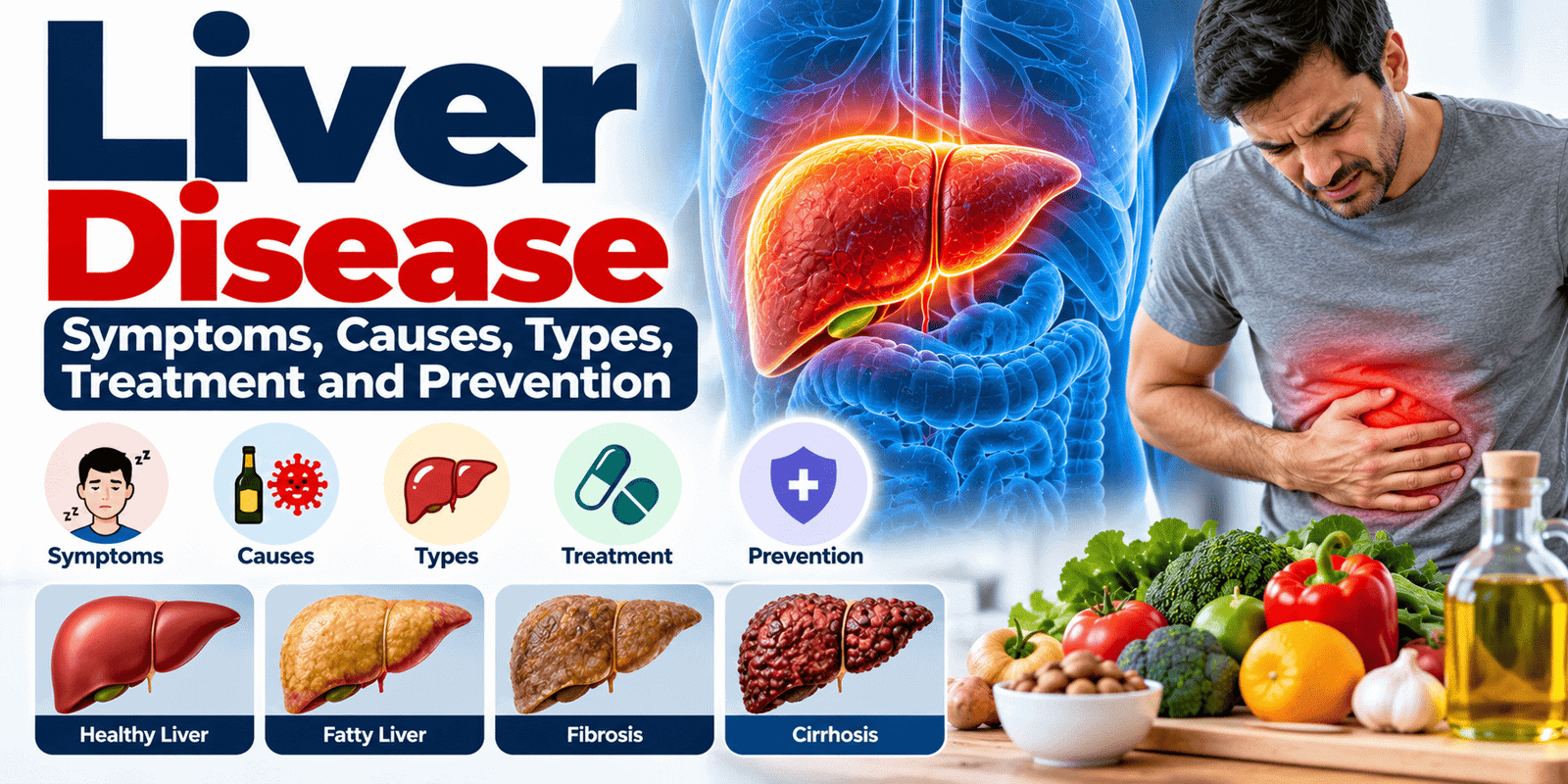
Liver Disease: Symptoms, Causes, Types, Treatment and Prevention
The liver is one of the body’s most important organs. It helps process nutrients, supports digestion, stores energy, processes medicines and chemicals, and performs many other essential functions.
Liver disease refers to many different conditions that can damage the liver. Some liver diseases develop slowly and cause few or no symptoms at first. Others can develop suddenly and may require urgent medical care.
Common causes include fatty liver disease, alcohol-associated liver disease, viral hepatitis, autoimmune conditions, inherited disorders, and certain medicines or toxins. Long-term liver damage can lead to fibrosis, cirrhosis, liver failure, or liver cancer.
This guide explains liver disease symptoms, causes, types, diagnosis, treatment, prevention, and important warning signs.
What Is Liver Disease?
Liver disease is a general term for any condition that affects the structure or function of the liver.
The liver performs many important jobs, including:
- Processing nutrients from food
- Helping with digestion
- Producing important proteins
- Processing certain medicines and chemicals
- Helping regulate blood chemistry
- Storing energy
- Supporting immune functions
- Producing bile to help digest fats
There are many different liver diseases, and their symptoms and treatments can be very different.
Liver Disease Symptoms
One of the challenging things about liver disease is that early disease may cause few or no symptoms.
Some people may not know they have liver damage until the condition becomes more advanced.
Possible symptoms include:
1. Tiredness and Weakness
Persistent tiredness or weakness can occur with liver disease.
However, fatigue is common in many other conditions, so it does not automatically mean that someone has liver disease.
2. Loss of Appetite
Some people with liver disease may experience reduced appetite.
3. Nausea or Vomiting
Nausea and vomiting can occur, particularly when liver disease becomes more advanced.
4. Abdominal Discomfort
Some people may experience discomfort in the upper-right area of the abdomen, where the liver is located.
5. Jaundice
Jaundice causes the skin or whites of the eyes to become yellow.
It can occur when bilirubin builds up in the body and may be a sign of liver or bile-duct problems.
6. Itchy Skin
Persistent itching can occur in some liver conditions.
7. Dark Urine
Some advanced liver conditions can cause urine to become darker than usual.
8. Swelling
Advanced liver disease can cause fluid to build up in the legs, ankles, feet, or abdomen.
Abdominal fluid buildup is called ascites.
9. Easy Bruising or Bleeding
Advanced cirrhosis can affect normal blood clotting and may cause easier bruising or bleeding.
10. Confusion or Changes in Thinking
Severe liver disease can sometimes cause a condition called hepatic encephalopathy, which may lead to confusion, memory problems, sleep changes, or personality changes.
Common Types of Liver Disease
There are many types of liver disease.
1. Fatty Liver Disease
Fatty liver disease occurs when excess fat builds up in the liver.
The condition is now commonly described using the term metabolic dysfunction-associated steatotic liver disease (MASLD) for many people who have fatty liver associated with metabolic risk factors.
It can be associated with:
- Overweight or obesity
- Insulin resistance
- Type 2 diabetes
- Metabolic syndrome
- Other metabolic risk factors
Fatty liver disease may have few or no symptoms.
Some people develop liver inflammation and scarring, which can eventually progress to cirrhosis.
2. Alcohol-Associated Liver Disease
Regular heavy alcohol use can damage the liver.
Alcohol-related liver disease can progress through different forms of injury and may eventually result in cirrhosis.
If alcohol is contributing to liver disease, stopping alcohol is an important part of medical management. People who are dependent on alcohol may need professional support because suddenly stopping can sometimes be medically dangerous.
3. Viral Hepatitis
Hepatitis means inflammation of the liver.
The main viral hepatitis types are:
- Hepatitis A
- Hepatitis B
- Hepatitis C
- Hepatitis D
- Hepatitis E
These viruses differ in how they spread, how severe they can be, and how they can be prevented or treated.
Hepatitis B and C can become chronic infections and are important causes of cirrhosis and liver cancer worldwide.
Vaccines are available for hepatitis A and hepatitis B.
Hepatitis C can often be treated effectively with modern antiviral medicines under medical supervision.
4. Autoimmune Liver Disease
In autoimmune liver diseases, the immune system mistakenly attacks liver tissue or structures related to the liver.
Examples include:
- Autoimmune hepatitis
- Primary biliary cholangitis
- Primary sclerosing cholangitis
These conditions require medical evaluation and long-term management.
5. Inherited Liver Diseases
Some liver diseases are caused by genetic changes passed through families.
Examples include:
- Hemochromatosis
- Wilson disease
- Alpha-1 antitrypsin deficiency
These conditions may require specialist evaluation and monitoring.
What Causes Liver Disease?
Liver disease can have many causes.
Common causes include:
- Excess alcohol use
- Fat accumulation in the liver
- Viral hepatitis
- Obesity and metabolic problems
- Type 2 diabetes
- Certain medicines
- Some toxins
- Autoimmune diseases
- Genetic conditions
- Problems affecting bile ducts
- Certain heart conditions
Some people can have more than one cause of liver damage.
Liver Disease Risk Factors
Your risk may be higher if you have:
- Obesity or overweight
- Type 2 diabetes
- Metabolic syndrome
- Heavy or regular alcohol use
- A history of viral hepatitis
- Family history of certain liver diseases
- Certain genetic conditions
- Long-term exposure to certain medicines or toxins
- Some autoimmune conditions
Having a risk factor does not mean that you definitely have liver disease.
Fatty Liver and Liver Disease
Fatty liver is increasingly recognized as an important liver-health problem.
Many people with fatty liver have no obvious symptoms.
Healthy lifestyle changes can help reduce liver fat and, in people with overweight or obesity, gradual weight loss can improve fatty liver disease. Physical activity can also be beneficial even when significant weight loss does not occur.
Rapid weight loss and poor nutrition are not recommended as a treatment strategy.
If you have fatty liver, your doctor can help determine the cause and whether there is evidence of inflammation or fibrosis.
How Is Liver Disease Diagnosed?
Doctors may use several methods to evaluate liver health.
Medical History
A doctor may ask about:
- Symptoms
- Alcohol use
- Medicines
- Supplements
- Medical conditions
- Family history
- Previous hepatitis exposure
- Weight changes
Physical Examination
A physical examination may look for signs such as:
- Jaundice
- Abdominal swelling
- Leg swelling
- Other signs of chronic liver disease
Blood Tests
Blood tests can provide information about liver injury and function.
Depending on the situation, doctors may check liver enzymes, bilirubin, proteins, blood clotting, and tests for viral hepatitis or other conditions.
Imaging Tests
Doctors may use:
- Ultrasound
- CT scan
- MRI
- Elastography or other liver-stiffness testing
These tests can help evaluate the liver and detect certain structural changes or scarring.
Liver Biopsy
A liver biopsy involves taking a small sample of liver tissue for examination.
It is not necessary for every person with liver disease. Doctors decide whether it is appropriate based on the individual’s condition and other test results.
What Is Cirrhosis?
Cirrhosis is advanced scarring of the liver.
Scar tissue replaces healthy liver tissue and can interfere with normal liver function and blood flow through the liver.
Cirrhosis can result from several long-term liver conditions, including:
- Alcohol-associated liver disease
- Fatty liver disease
- Chronic hepatitis B
- Chronic hepatitis C
- Autoimmune liver diseases
- Genetic diseases
- Other chronic causes of liver injury
Early cirrhosis may cause few symptoms.
As the condition becomes more advanced, complications can develop.
Liver Disease Treatment
Treatment depends on:
- The type of liver disease
- The underlying cause
- How much liver damage has occurred
- Whether complications are present
- Other health conditions
There is no single treatment that works for every type of liver disease.
Lifestyle Changes
Depending on the condition, doctors may recommend:
- Maintaining a healthy weight
- Regular physical activity
- Healthy eating
- Avoiding alcohol when appropriate
- Avoiding unnecessary medicines or supplements that can harm the liver
- Managing diabetes
- Managing cholesterol and blood pressure
Treating Viral Hepatitis
Some viral hepatitis infections require specific antiviral medicines.
For example, chronic hepatitis C can be treated with antiviral medicines.
Chronic hepatitis B may also require long-term medical monitoring and, in some people, antiviral treatment.
The appropriate treatment depends on the individual infection and medical assessment.
Treatment for Fatty Liver Disease
For people with fatty liver disease and overweight or obesity, doctors may recommend gradual weight loss through healthy eating and physical activity.
NIDDK notes that losing at least 3% to 5% of body weight can reduce liver fat, while greater weight loss may be needed to improve liver inflammation and fibrosis in some people.
The goal should be sustainable lifestyle improvement rather than crash dieting.
Treatment for Cirrhosis
Cirrhosis itself does not have a simple treatment that removes all existing scar tissue.
However, treating the underlying cause may slow further liver damage, and doctors can treat many complications of cirrhosis.
Treatment may include medicines, dietary changes, procedures, regular monitoring, or specialist care.
Severe liver failure may require consideration of a liver transplant.
Liver-Friendly Diet
There is no single diet that is appropriate for every liver condition.
However, a generally healthy eating pattern can support overall liver and metabolic health.
Focus on:
- Vegetables
- Fruits
- Whole grains
- Beans and legumes
- Nuts and seeds
- Appropriate protein sources
- Healthy fats
- Reasonable portion sizes
- Adequate hydration
Try to limit:
- Highly processed foods
- Excess added sugar
- Excess saturated fat
- Excess calories
- Heavy alcohol use
If you already have advanced liver disease, your dietary needs may be different.
A doctor or registered dietitian can create an individualized plan.
Can Liver Disease Be Prevented?
Not every liver disease can be prevented, especially inherited or autoimmune conditions.
However, many risk factors can be reduced.
Maintain a Healthy Weight
A healthy body weight can reduce the risk of metabolic liver disease.
Stay Physically Active
Regular physical activity supports metabolic health and can benefit people with fatty liver disease.
Avoid Excess Alcohol
Heavy alcohol use can damage the liver.
If you have alcohol-associated liver disease, medical professionals may recommend complete alcohol avoidance.
Prevent Hepatitis
Depending on your location and risk factors:
- Hepatitis A vaccination may be appropriate.
- Hepatitis B vaccination can prevent hepatitis B infection.
- Safe injection practices reduce blood-borne infection risk.
- Avoid sharing needles or equipment that may contain blood.
- Appropriate testing can identify hepatitis infections.
WHO identifies hepatitis B and C as major causes of chronic liver disease, cirrhosis, and liver cancer.
Be Careful With Medicines and Supplements
Some medicines and herbal supplements can cause liver injury.
Do not assume that a product is safe simply because it is labeled “natural.”
Talk with a doctor or pharmacist before starting new supplements, particularly if you already have liver disease.
When Should You See a Doctor?
Talk with a healthcare professional if you have:
- Persistent unexplained fatigue
- Repeated abdominal discomfort
- Yellow skin or eyes
- Persistent itching
- Dark urine without an obvious explanation
- Unexplained weight loss
- Swelling of the abdomen or legs
- Repeated nausea or vomiting
- A history of hepatitis
- Heavy alcohol use
- Abnormal liver blood tests
- A family history of liver disease
Early evaluation can help identify the cause and determine whether treatment or monitoring is needed.
Liver Disease Emergency Warning Signs
Seek urgent medical attention if you develop serious symptoms such as:
- Vomiting blood
- Black or bloody stools
- Severe confusion
- Loss of consciousness
- Severe abdominal swelling with serious illness
- Severe jaundice with worsening illness
- Sudden severe abdominal pain
- Difficulty breathing
- Other symptoms suggesting a medical emergency
Vomiting blood or black/bloody stools can occur with serious complications of cirrhosis and require immediate hospital care.
Frequently Asked Questions
What are the first signs of liver disease?
Many liver diseases have few or no symptoms during the early stages. When symptoms occur, they may include tiredness, poor appetite, nausea, itching, abdominal discomfort, or jaundice.
Can liver disease be cured?
It depends on the type and stage.
Some liver conditions can be treated very effectively, while advanced cirrhosis involves permanent scarring. Treating the underlying cause can sometimes prevent further damage or slow progression.
Is fatty liver dangerous?
Fatty liver can be mild, but some people develop liver inflammation and fibrosis. In advanced cases, it can progress to cirrhosis and increase the risk of serious complications.
Can fatty liver be reversed?
Liver fat can improve with appropriate lifestyle changes, particularly gradual weight loss when overweight or obese and regular physical activity. The amount of improvement depends on the person’s condition.
Does liver disease always cause pain?
No. Many liver diseases do not cause noticeable pain, particularly during early stages.
Can you have liver disease without symptoms?
Yes. Some liver diseases may remain silent for a long time.
Is hepatitis the same as liver disease?
No. Hepatitis means inflammation of the liver. Viral hepatitis is one group of conditions that can cause liver disease, but liver disease has many other causes.
Can alcohol cause liver disease?
Yes. Long-term heavy alcohol use can damage the liver and may lead to cirrhosis.
What tests check liver health?
Doctors may use blood tests, imaging tests, elastography, and sometimes liver biopsy depending on the suspected condition.
Can liver disease lead to liver cancer?
Some chronic liver diseases, particularly conditions that cause cirrhosis or chronic hepatitis B, can increase the risk of liver cancer.
Key Takeaways
- Liver disease includes many different conditions.
- Early liver disease may cause no symptoms.
- Fatty liver, alcohol, viral hepatitis, autoimmune diseases, medicines, and genetic conditions can all affect the liver.
- Jaundice, abdominal swelling, severe itching, confusion, vomiting blood, or black stools can indicate serious disease.
- Diagnosis may involve blood tests, imaging, and sometimes biopsy.
- Treatment depends on the cause and severity.
- Healthy weight, physical activity, appropriate nutrition, hepatitis prevention, and avoiding harmful alcohol use can reduce the risk of some liver diseases.
- Never stop or change prescribed medication without medical advice.
- Seek urgent medical care for severe or potentially life-threatening symptoms.
Medical Disclaimer
The information in this article is provided for general educational and informational purposes only.
It is not intended to replace professional medical advice, diagnosis, or treatment.
Do not diagnose yourself or change medicines based only on this article. Liver disease can have many different causes, and treatment depends on individual medical history, examination, laboratory results, imaging, and other factors.
If you have symptoms of liver disease or concerns about your liver health, speak with a qualified healthcare professional.
If you experience a medical emergency, contact your local emergency medical service or visit the nearest emergency department.
Trusted Medical References
- National Institute of Diabetes and Digestive and Kidney Diseases (NIDDK) — Liver Disease
- NIDDK — Cirrhosis: Symptoms, Causes, Diagnosis and Treatment
- NIDDK — Fatty Liver Disease (NAFLD/MASLD)
- World Health Organization (WHO) — Hepatitis
- WHO — Hepatitis B Fact Sheet, 2026
- NHS — Liver Disease
Article reviewed for general medical accuracy: October 2026